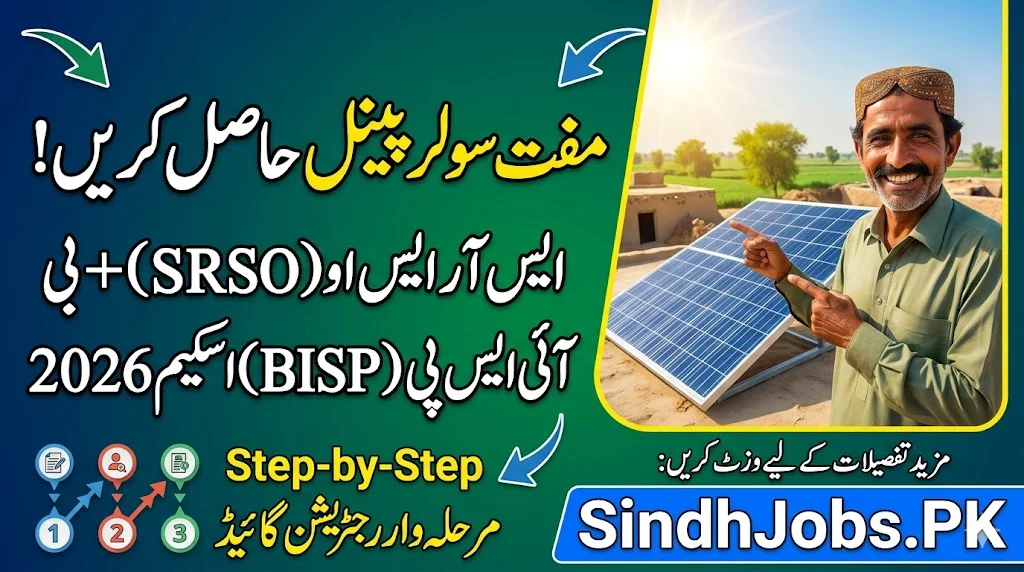
The Ultimate Guide to the SRSO-BISP Free Solar Scheme 2026: Claim Your Solar Home System Today
Amid rising electricity prices and extreme heatwaves across Sindh, access to affordable and reliable energy has become a serious challenge—especially for low-income households. To address this crisis, the Government of Sindh, in collaboration with the World Bank and the Sindh Rural Support Organization, has launched the Sindh Solar Energy Project (SSEP).
This initiative aims to provide free solar home systems to deserving families registered under the Benazir Income Support Programme (BISP). The goal is simple yet powerful: reduce energy poverty, improve living conditions, and help families become financially independent through clean energy.
1. What is the SRSO-BISP Free Solar Scheme?
The Sindh Solar Energy Project (SSEP) is a large-scale development project funded by the World Bank and implemented at the grassroots level by SRSO. It specifically targets poor households identified through the National Socio-Economic Registry (NSER).
The scheme focuses on:
- Providing free solar systems to eligible families
- Supporting households with no electricity access (off-grid areas)
- Reducing dependency on expensive electricity and harmful fuel sources
This program is not just about electricity—it is about uplifting communities and building climate resilience.
2. Who is Eligible? (Target Districts and Criteria)
A. Priority Districts
The scheme is currently active in districts that were severely affected by the 2022 floods and have high poverty levels. These include:
- Shikarpur
- Khairpur
- Jacobabad
- Larkano
- Kamber-Shahdadkot
- Kashmore
Residents of these areas have higher chances of selection under the program.
B. Core Eligibility Criteria
To qualify for the scheme, applicants must meet the following conditions:
- BISP Registration: Must be an active beneficiary of the Benazir Income Support Programme
- Low Poverty Score: Preference is given based on PMT (Poverty Means Test) score
- Flood-Affected Status: Families impacted by floods are prioritized
- Off-Grid Location: Households without electricity connections receive top priority
3. What is Included in the Free Solar Kit?
Unlike low-quality solar products available in the market, the SRSO solar kits meet international standards set by the World Bank.
Each selected household receives a complete “Power Pack,” including:
- High-Efficiency Solar Panel – Built to withstand extreme temperatures
- Solar Battery – Provides backup power during the night
- Charge Controller – Protects battery life and improves performance
- DC Fans – Energy-efficient cooling solution for hot climates
- LED Lights – Bright, safe lighting without fire hazards
- Mobile Charging Port – Helps families stay connected
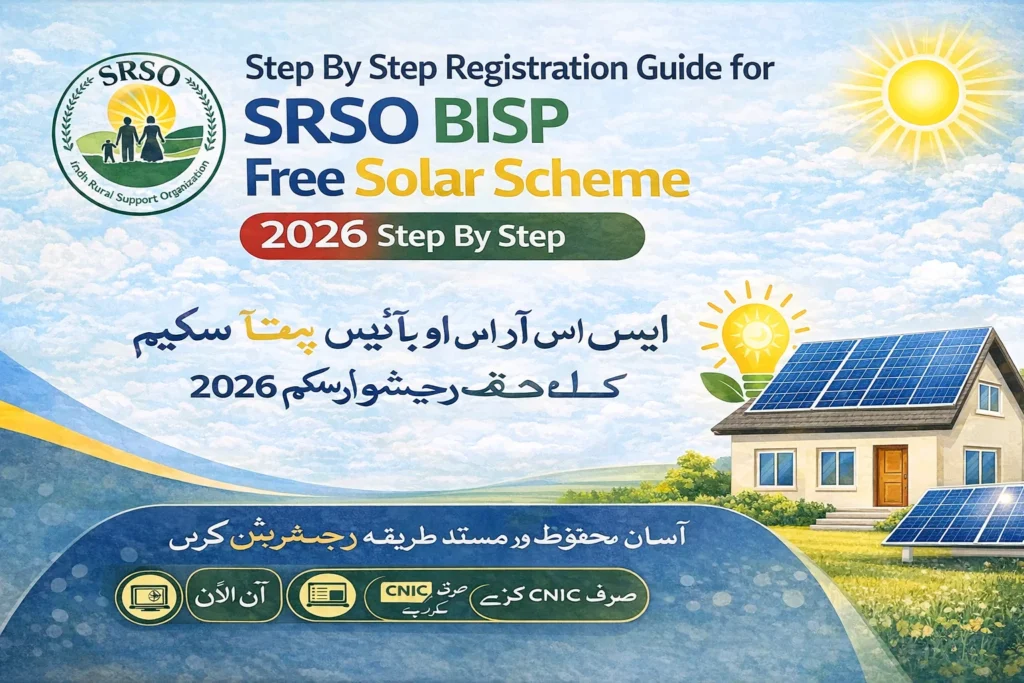
4. How to Apply: Step-by-Step Registration Guide
The application process is designed to be transparent and free from corruption or middlemen.
Step 1: Check Your BISP Status
Confirm your eligibility by sending your CNIC number to 8171 or visiting the official BISP portal.
Step 2: Visit Your Local LSO
SRSO operates through Local Support Organizations (LSOs) at the village level.
- Visit your nearest LSO office
- Request the Solar Beneficiary Verification Form
Step 3: Document Submission
Prepare and submit the following documents:
- Original CNIC with photocopy
- BISP card or payment proof
- Photo of your house (for installation verification)
Step 4: Physical Verification
An SRSO team will visit your home to:
- Verify your identity and residence
- Assess your financial condition
- Confirm installation feasibility
Step 5: Installation and Training
Once approved:
- Solar system is installed by trained technicians
- Basic training is provided for maintenance and usage
5. Economic & Social Impact: How It Changes Lives
This scheme has a direct and lasting impact on low-income families.
- Zero Electricity Bills: Families save up to 10–15% of their monthly income
- Better Education: Children can study at night with proper lighting
- Improved Health: No exposure to harmful kerosene fumes
- Heat Relief: Fans provide comfort during extreme weather
- Women Empowerment: Systems are often registered in women’s names, increasing their role in household decisions
For a family earning PKR 20,000 per month, eliminating a PKR 3,000 electricity bill can significantly improve financial stability.
6. The World Bank and Sindh Government Partnership
The success of the Sindh Solar Energy Project depends on strong collaboration:
- World Bank: Provides funding and technical guidelines
- Sindh Energy Department: Ensures policy implementation and monitoring
- Sindh Rural Support Organization: Executes the project at the community level
SRSO plays a vital role in reaching remote villages and ensuring that deserving families receive the benefits without discrimination.
Final Thoughts
The SRSO-BISP Free Solar Scheme 2026 is a life-changing opportunity for thousands of families across Sindh. By providing clean, reliable, and free energy, the government is not only addressing electricity shortages but also empowering communities to build a better future.
If you are eligible, take action today—verify your BISP status, visit your local LSO, and start your journey toward energy independence.