Sindh Solar System Scheme List Of Total Sindh Districts
The Sindh Solar Energy Project has become one of the most important renewable energy initiatives in Sindh. The project aims to provide clean, affordable, and reliable solar electricity to low-income and underserved households across the province.
According to HANDS Foundation’s official update, HANDS Foundation along with the Sindh Government inaugurated the Sindh Solar Energy Project in Sukkur, Ghotki, and Khairpur. The overall project is expected to benefit 200,000 beneficiaries across 30 districts of Sindh. As the Last Mile Distributor, HANDS will install 86,667 Solar Home Systems across 13 districts of Sindh.
CHECK Sindh Solar Eligibility by CNIC
Enter your CNIC number to check PMT eligibility
The project is part of Sindh’s broader effort to increase access to electricity, promote renewable energy, and support poor households facing energy shortages.
What is the Sindh Solar Energy Project?
The Sindh Solar Energy Project, also known as SSEP, is a renewable energy initiative designed to increase solar power generation and improve electricity access in Sindh province.
The official Sindh Solar Energy Project website states that the development objective of the project is to increase solar power generation and access to electricity in Sindh Province.
The project includes different components, such as:
- Utility-scale solar power development
- Rooftop solar systems on public buildings
- Solar Home Systems for poor and low-electricity-access households
- Technical assistance and capacity building
HANDS Foundation Role in Sindh Solar Energy Project
HANDS Foundation is working as a Last Mile Distributor under the Sindh Solar Energy Project.
This means HANDS is responsible for reaching selected households, coordinating field-level implementation, and installing solar home systems in assigned districts.
According to the official HANDS update:
| Detail | Information |
|---|---|
| Project | Sindh Solar Energy Project |
| Implementing Partner | Sindh Government |
| Last Mile Distributor | HANDS Foundation |
| Total Beneficiaries | 200,000 across Sindh |
| HANDS Target | 86,667 Solar Home Systems |
| HANDS Coverage | 13 districts |
| Inauguration Areas | Sukkur, Ghotki, Khairpur |
Inauguration Ceremony in Sukkur, Ghotki and Khairpur
The inauguration ceremony was chaired by Sindh Chief Minister Syed Murad Ali Shah. Senior political and government representatives also attended, including Syed Khursheed Ahmed Shah and Syed Nasir Hussain Shah, Minister for Energy and Planning & Development.
The launch in Sukkur, Ghotki, and Khairpur shows the government’s focus on rural and underserved areas where many households still face unreliable or limited electricity access.
Solar Home Systems Under Sindh Solar Energy Project
A key part of the project is the distribution and installation of Solar Home Systems.
According to World Bank project documents, the Solar Home Systems component supports the deployment of affordable solar home systems to 200,000 households in selected areas with no or low electricity access.
These systems are designed to help families meet basic electricity needs, especially in areas where grid electricity is unavailable, expensive, or unreliable.
Possible Uses of Solar Home Systems
A solar home system may help households use:
- LED lights
- Mobile phone charging
- Small fans
- Basic household electricity needs
- Emergency lighting
- Study lights for children
Exact system specifications may vary according to project design, district, and implementing partner.
Main Benefits of Sindh Solar Energy Project
1. Access to Clean Electricity
Families in low-electricity-access areas can benefit from solar power without depending fully on the grid.
2. Reduced Household Energy Cost
Solar systems can reduce the use of expensive fuel-based lighting or other costly alternatives.
3. Support for Poor Families
The project targets low-income households that need affordable energy support.
4. Better Education Environment
Children can study at night with solar-powered lighting.
5. Women and Household Convenience
Reliable lighting can improve household safety and daily activities, especially for women and children.
6. Climate-Friendly Energy
Solar power reduces reliance on fossil fuels and supports climate action in Pakistan.
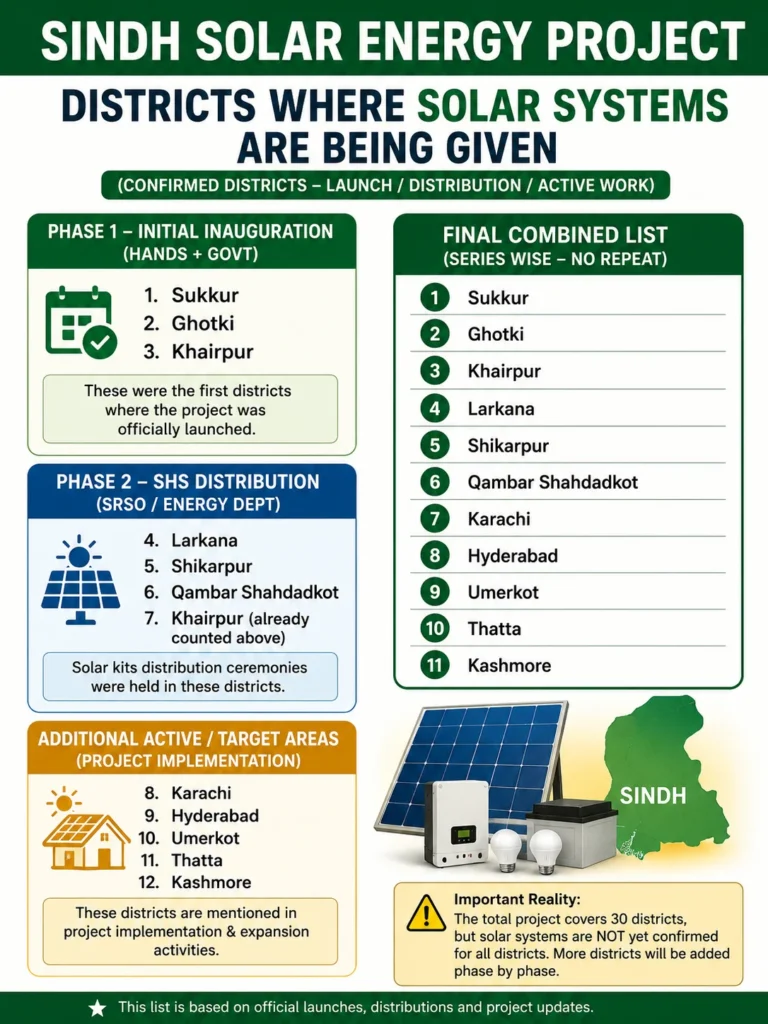
Districts Covered Under Sindh Solar Energy Project
The overall project aims to benefit households across 30 districts of Sindh. HANDS Foundation will install solar home systems across 13 districts as part of its assigned role.
The project has been inaugurated in:
- Sukkur
- Ghotki
- Khairpur
Other districts may be covered according to official project planning, partner allocation, and Sindh Government implementation schedule.
Who Can Benefit from Sindh Solar Energy Project?
The project mainly focuses on poor and underserved households with limited electricity access.
Expected Beneficiary Categories
Eligible beneficiaries may include:
- Low-income households
- Off-grid households
- Families with poor access to electricity
- Rural communities
- Vulnerable families
- Households selected through official verification
- Communities identified by project partners
Final selection depends on official Sindh Government and project partner criteria.
How to Apply for Sindh Solar Energy Project
Many people are searching for Sindh Solar Energy Project apply online or Sindh solar panel scheme registration. However, citizens should be careful because fake online forms and unofficial registration links often appear during government welfare projects.
At present, people should verify registration or selection details only through:
- Sindh Energy Department
- Official Sindh Solar Energy Project website
- HANDS Foundation official channels
- District administration
- Official project field teams
- Authorized implementation partners
The official Sindh Solar Energy Project website describes the project and its components, but citizens should rely on official announcements for registration and beneficiary selection updates.
Documents That May Be Required
If household verification or registration is required, beneficiaries may need the following documents:
| Document | Purpose |
|---|---|
| Original CNIC | Identity verification |
| CNIC copy | Application or record keeping |
| Mobile number | Contact and updates |
| Household address | Location verification |
| Electricity access details | Need assessment |
| Poverty or household information | Eligibility verification |
| Family details | Beneficiary record |
The actual document requirement should be confirmed from official field teams or the relevant project office.
Sindh Solar Energy Project Online Registration Safety Tips
To avoid fraud, citizens should follow these safety instructions:
- Do not pay money to agents for selection
- Do not submit CNIC on unknown websites
- Do not trust WhatsApp registration links unless officially verified
- Do not share OTP, bank details, or personal codes
- Confirm project teams through official channels
- Use only Sindh Government, SSEP, or HANDS official updates
- Report fake forms or payment demands
Why the Sindh Solar Energy Project Matters
Sindh has many rural and low-income areas where families face electricity shortages, high energy costs, and limited access to reliable power. The Solar Home Systems component can help improve quality of life by providing basic electricity for lighting, charging, and household needs.
The project also supports Pakistan’s shift toward renewable energy and climate-friendly development. Through solar energy, families can reduce dependence on non-renewable energy sources and improve daily living conditions.
Frequently Asked Questions
What is the Sindh Solar Energy Project?
It is a renewable energy project designed to increase solar power generation and improve access to electricity in Sindh.
Who inaugurated the project in Sukkur, Ghotki, and Khairpur?
The inauguration was chaired by Sindh Chief Minister Syed Murad Ali Shah, with other senior government representatives present.
What is HANDS Foundation’s role?
HANDS Foundation is working as a Last Mile Distributor and will install 86,667 Solar Home Systems across 13 districts of Sindh.
How many beneficiaries will the overall project support?
The overall project is expected to benefit 200,000 beneficiaries across 30 districts of Sindh.
Is online registration open?
People should check only official Sindh Government, SSEP, and HANDS Foundation channels for registration updates. Avoid fake links and unofficial forms.
Are the solar systems free?
The project includes subsidized or supported solar home systems for selected households. Exact cost, subsidy, or contribution details should be confirmed from official project authorities.
Which districts are included?
The overall project covers 30 districts. HANDS will work in 13 assigned districts, and the project has been inaugurated in Sukkur, Ghotki, and Khairpur.
Final Words
The Sindh Solar Energy Project is a major step toward clean energy access for low-income and underserved households in Sindh. With the support of the Sindh Government and implementation partners like HANDS Foundation, the project aims to install thousands of solar home systems and improve electricity access across the province.
HANDS Foundation’s role as a Last Mile Distributor is especially important because it helps bring solar energy directly to households at the community level. Citizens interested in this project should stay updated through official Sindh Government, SSEP, and HANDS Foundation channels and avoid fake registration links or agents demanding money.
Disclaimer: This article is for informational purposes only. Beneficiary selection, registration, cost, subsidy, and installation details should be verified through official Sindh Government, Sindh Solar Energy Project, or HANDS Foundation sources.