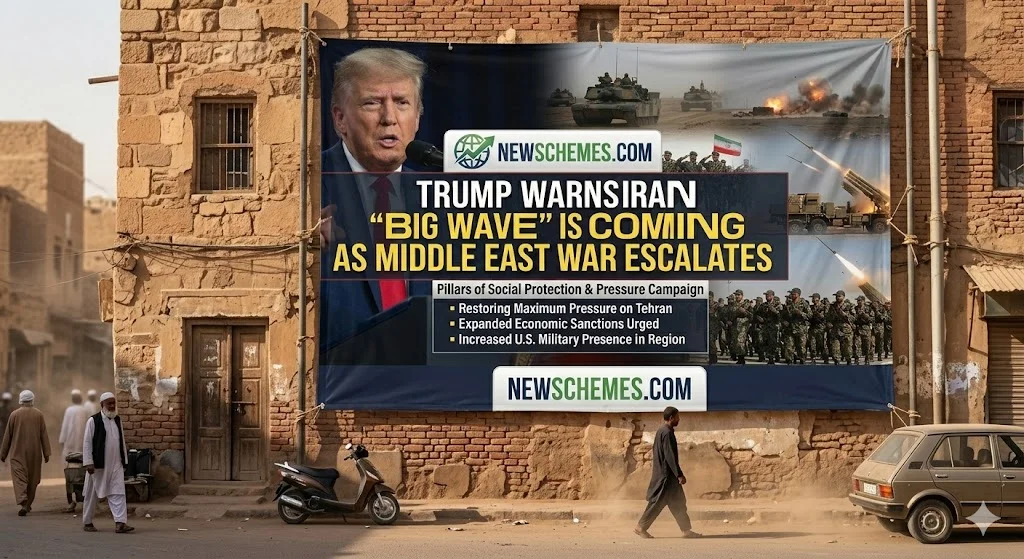
The conflict between the United States and Iran is rapidly intensifying across the Middle East, with President Donald Trump issuing a stark warning that a “big wave” of US military action is still to come. The President indicated a significant escalation, stating in a phone interview that the US military is currently “knocking the crap out of them,” but emphasized that the most substantial strikes have not yet been launched. “The big one is coming soon,” Trump warned, signaling an imminent, possible expansion of operations against Tehran.
Trump’s Dire Warning: A “Big Wave” of US Military Action Against Iran
President Trump’s warning underscores the volatile nature of the current situation. His comments suggest that despite ongoing military engagements, the US retains considerable unexercised military power aimed at Iran. The implication is a potential for a far more devastating series of strikes, contributing to the broader Middle East war escalates narrative. This sustained pressure aims to fundamentally alter the regional power dynamics.
Pentagon’s Stance Amidst Escalating Middle East War
At a rare Pentagon news conference, US Defense Secretary Pete Hegseth clarified that the campaign is not aimed at regime change, even as he encouraged Iranians to “take advantage” of the moment. Chairman of the Joint Chiefs of Staff Gen. Dan Caine cautioned that the Middle East conflict would not be a “single, overnight operation,” preparing Americans for additional casualties as the war unfolds. This suggests a prolonged engagement rather than a swift resolution.
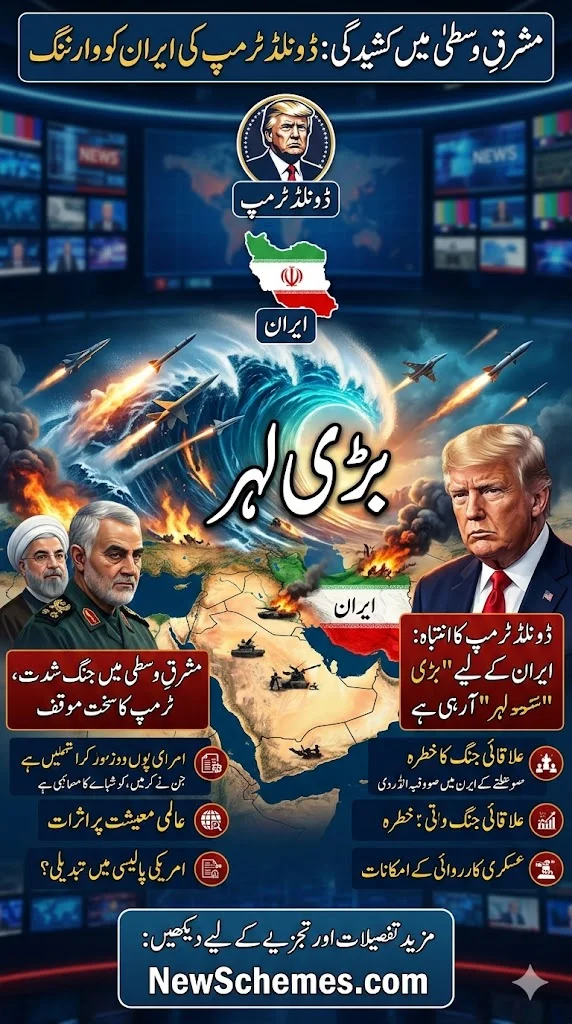
The US Central Command has confirmed that four American service members have been killed and 18 seriously wounded since operations began, highlighting the immediate human cost of the escalating conflict. In a concerning incident, three US fighter jets were accidentally shot down by Kuwaiti air defenses, described by officials as a “friendly fire” event. Fortunately, all crew members survived and are reported to be in stable condition, as detailed on NewSchemes.com.
Tehran’s Refusal: Iran Will Not Negotiate Amidst US Pressure
A senior Iranian official firmly declared that Tehran “will not negotiate” with Washington, despite mounting international pressure. This unwavering stance makes diplomatic resolution seem distant amidst the US-Iran escalation. The war erupted after US and Israeli strikes targeted Iranian nuclear facilities, which the White House claims “totally obliterated” Tehran’s program, fueling retaliatory actions.
Since the initial strikes, Iran has launched a series of retaliatory missile and drone attacks across the region. These attacks have predominantly targeted US bases and key infrastructure in Gulf nations, extending the reach of the Middle East war. This tit-for-tat dynamic consistently pushes the conflict towards further severe escalation.
Gulf States Under Fire: Regional Impact of Escalating Conflict
The impact of the expanding Iran-US conflict has been acutely felt by various Gulf states. The United Arab Emirates reported intercepting nine ballistic missiles, six cruise missiles, and 148 drones in a single day, showcasing the intensity of Iranian retaliation. In a significant escalation, Qatar confirmed it shot down two Iranian Su-24 bombers, in addition to intercepting multiple missiles aimed at its territory.
Explosions have been reported in major cities such as Dubai, Abu Dhabi, and Doha. Airspace closures due to security concerns have severely disrupted regional travel, causing widespread inconvenience. Furthermore, QatarEnergy, the state-run energy company, was forced to halt liquefied natural gas (LNG) production after an Iranian strike on its Ras Laffan facility. Given that Qatar accounts for roughly 20% of global LNG exports, this incident immediately raised serious concerns about global energy supply and escalating economic impact.
Global Economic Fallout: Oil Prices Surge Amidst Middle East Conflict
Oil markets reacted sharply to the widening Middle East war. Brent crude briefly surged above $82 a barrel before settling near $77, still marking a significant increase for the day. Energy analysts warn that persistently rising oil prices could significantly strengthen Russia’s economy, providing a boost to Moscow’s budget amidst its ongoing war in Ukraine. This adds another layer of complexity to the global geopolitical landscape.
US gasoline prices are already climbing, with analysts predicting further increases in the coming weeks if regional instability persists. Consumers worldwide are feeling the immediate and tangible effects of the escalating conflict, emphasizing its broad economic ramifications. Information on energy market alerts can often be found on platforms like NewSchemes.com.
Israel’s Stance: Standing Against the Tyrants of Tehran
Israel’s Prime Minister Benjamin Netanyahu confirmed his nation’s active involvement, stating that Israel and the US would stand with the Iranian people “when they cast off the yoke of tyranny.” Speaking after an Iranian missile strike killed civilians in Israel, Netanyahu declared, “We are acting to defend ourselves but, in so doing, we are protecting many others.”
Israel has also expanded its strikes against Hezbollah targets in Lebanon and closed Gaza crossings “until further notice,” citing heightened security concerns. These actions demonstrate Israel’s commitment to self-defense and its role in the broader Middle East power struggle against Iranian influence.
Global Leaders Call for Restraint Amidst Escalating Tensions
The international community has watched the escalating Middle East war with growing alarm. Russian President Vladimir Putin held calls with Gulf leaders, warning that the US-Israeli campaign could trigger a broader regional war. European and other Gulf officials have also expressed deep concern that continued escalation could destabilize global energy markets even further and draw additional countries into the perilous conflict.
Meanwhile, British Prime Minister Keir Starmer defended his decision not to participate in the initial strikes, though the UK has allowed US forces to use British bases for defensive operations. This highlights the delicate balance many nations are attempting to strike, trying to avoid direct involvement while navigating the severe implications of the global US-Iran crisis.
What Comes Next: The Looming “Big Wave” of US-Iran Conflict
With both Washington and Tehran signaling resolve rather than retreat, the US-Iran conflict shows few signs of slowing down. President Trump has not ruled out deploying ground troops if deemed “necessary,” though he suggested they may not be required at this stage. As missile exchanges continue and global energy markets tremor, the Middle East faces one of its most volatile moments in years. The persistent risk remains that the “big wave” Trump warned about could push the region into an even wider, more devastating war, with unforeseeable global consequences.
FAQs on the Escalating Middle East Conflict
What is the core reason for the current escalation between the US and Iran?
The current escalation reportedly erupted after US and Israeli strikes targeted Iranian nuclear facilities. The White House claimed these strikes “totally obliterated” Tehran’s nuclear program, leading to Iranian retaliatory missile and drone attacks.What was President Trump’s specific warning about future actions against Iran?
President Trump warned that a “big wave” of US military action is still to come, stating that while the US is “knocking the crap out of them,” the largest strikes have not yet been launched. He added, “The big one is coming soon.”What has been the impact on the Gulf states?
Gulf states like the UAE and Qatar have faced significant Iranian retaliatory attacks, including ballistic missile, cruise missile, and drone strikes. Explosions have been reported in cities like Dubai, Abu Dhabi, and Doha, and Qatar’s LNG production was halted after a strike on its Ras Laffan facility.How has the conflict affected global oil prices?
Oil markets reacted sharply, with Brent crude briefly surging above $82 a barrel before settling near $77. Energy analysts warn that rising oil prices could strengthen Russia’s economy and are already causing US gasoline prices to climb.What is Iran’s stance on negotiations with the US?
A senior Iranian official has stated unequivocally that Tehran “will not negotiate” with Washington, despite significant international pressure for dialogue.Have there been US casualties in the ongoing operations?
Yes, the US Central Command confirmed that four American service members have been killed and 18 seriously wounded since operations began. There was also a “friendly fire” incident resulting in three US fighter jets being shot down by Kuwaiti air defenses, though all crew members survived.What steps have global leaders taken in response to the escalation?
Russian President Vladimir Putin has called Gulf leaders to warn against a broader regional war. European and other Gulf officials have expressed concern about destabilized energy markets. British Prime Minister Keir Starmer’s government has allowed US forces to use British bases for defensive operations but did not participate in initial strikes.
Conclusion
The escalating Middle East war, driven by the deepening conflict between the US and Iran, presents a grave and uncertain future for the region and beyond. President Trump’s explicit warning of a “big wave” of military action signals a potential for further, unprecedented devastation. With Iran staunchly refusing negotiations and both sides demonstrating unwavering resolve, the immediate prospect of de-escalation appears dim. The measurable impacts — from rising oil prices and disrupted global energy supplies to significant casualties and heightened regional instability – underscore the far-reaching consequences of this intensifying crisis. As the international community grapples with calls for restraint, the risk remains high that the already volatile situation could spiral into a much wider regional conflagration, with severe and prolonged global ramifications.