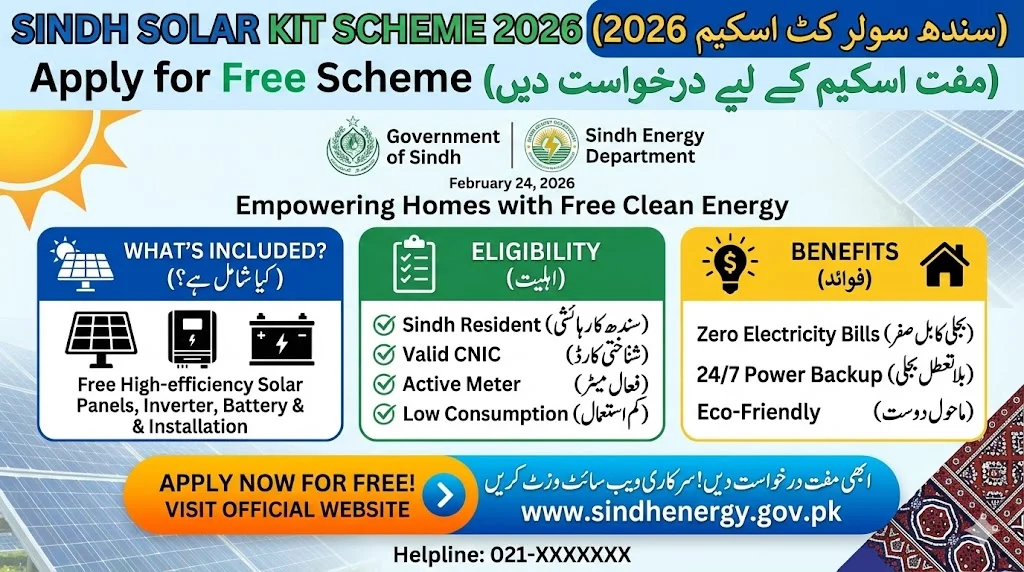
Sindh Solar Kit Scheme 2026: Illuminating Rural Homes with Sustainable Energy
The Sindh Solar Kit Scheme 2026 represents a significant stride towards energy independence and socio-economic upliftment for vulnerable communities across rural Sindh. This ambitious initiative, spearheaded by the Sindh Government in collaboration with HANDS Pakistan and the Sindh Energy Department, aims to provide free energy solutions to thousands of households, particularly those enrolled in the Benazir Income Support Program (BISP) and families impacted by the devastating 2022 floods. As of early 2026, the project has already delivered over 170,000 solar kits, bringing sustainable electricity to regions previously deprived of reliable power access. This comprehensive program is integral to Pakistan’s broader commitment to green energy, aligning with the national target of achieving 45 gigawatts (GW) of solar capacity by 2030. By empowering remote and off-grid areas with Solar Home Systems (SHS), the Sindh government is not only addressing immediate energy needs but also fostering environmental sustainability and reducing the burden on the national grid.
A Vision for Sustainable Energy: The Sindh Solar Kit Scheme’s Core Objectives
The Sindh Solar Home System (SHS) Initiative is a cornerstone of the provincial government’s strategy for energy equity and rural empowerment. This project focuses on delivering tangible benefits to deserving families, providing them with reliable and free energy solutions. The collaboration between the Sindh Energy Department and HANDS Pakistan is crucial for the successful implementation and reach of this solar kit initiative. The primary goal of the Sindh Solar Project 2026 is to ensure energy access for remote and off-grid rural areas, transforming daily life for hundreds of thousands of residents.
With more than 170,000 kits distributed and counting, the project is on track to meet its ambitious targets, making early 2026 a pivotal period for rural electrification efforts. These robust solar home systems promise to significantly improve living standards, enabling consistent access to light, communication, and basic electric appliances for families who previously relied on expensive and polluting alternatives. The impact of the Sindh Solar Kit Scheme extends beyond mere electricity provision; it aims to enhance educational opportunities, healthcare services, and overall quality of life.
Empowering Vulnerable Communities: Eligibility for the Free Sindh Solar Kit
To ensure the free Sindh Solar Kit reaches those in genuine need, the government has established strict eligibility criteria focused on the province’s most vulnerable populations. This targeted approach guarantees that the benefits of the scheme are directed towards individuals and families facing significant socio-economic challenges or recovering from natural disasters. The scheme forms a critical part of government support programs, enhancing the lives of its beneficiaries and promoting equitable energy distribution.
Families currently enrolled in the Benazir Income Support Program (BISP) are given top priority under the Sindh Solar Kit Scheme. These households are identified through existing national registries, streamlining the verification process and ensuring that aid reaches the most struggling segments of society. Additionally, households whose homes were damaged or destroyed during the catastrophic 2022 floods are eligible for immediate relief through these solar home systems, acknowledging their dire need for recovery support.
Residents of remote rural regions where the national electricity grid has not yet reached also qualify for the free solar kits. This criterion directly addresses the issue of energy poverty in off-grid areas, which often face the highest barriers to electricity access, leading to significant developmental disparities. To ensure equitable distribution and prevent misuse, a rigorous verification process is in place, strictly enforcing the principle of one kit per household.
Transparent Pathways: Ensuring Fair Distribution of Solar System Solutions
Maintaining transparency and efficiency in the distribution of these valuable solar system solutions is paramount for the Sindh Energy Department and HANDS Pakistan. They have implemented a robust data cleansing and verification process to ensure accountability at every stage of the initiative. This systematic approach aims to prevent any discrepancies and ensure fair allocation of resources for the Sindh Solar Kit Scheme 2026. Beneficiary lists are meticulously cross-matched with both BISP and PDMA (Provincial Disaster Management Authority) databases.
This step is critical for data verification, confirming the eligibility of each household and preventing duplicate entries into the system. Advanced tracking mechanisms further bolster this effort, guaranteeing that only one solar kit is allocated per eligible household, a cornerstone of effective resource management. The distribution and installation of kits are often conducted in clusters, especially in rural areas, to leverage logistical efficiencies.
This method not only optimizes logistical efforts but also ensures that technical support is readily available for villagers during the setup phase. HANDS Pakistan field teams provide on-site assistance and guidance, facilitating a smooth transition to solar power for beneficiary families, an example of effective Schemess.com implementation. This hands-on approach ensures that recipients can maximize the benefits of their new solar home systems from day one.
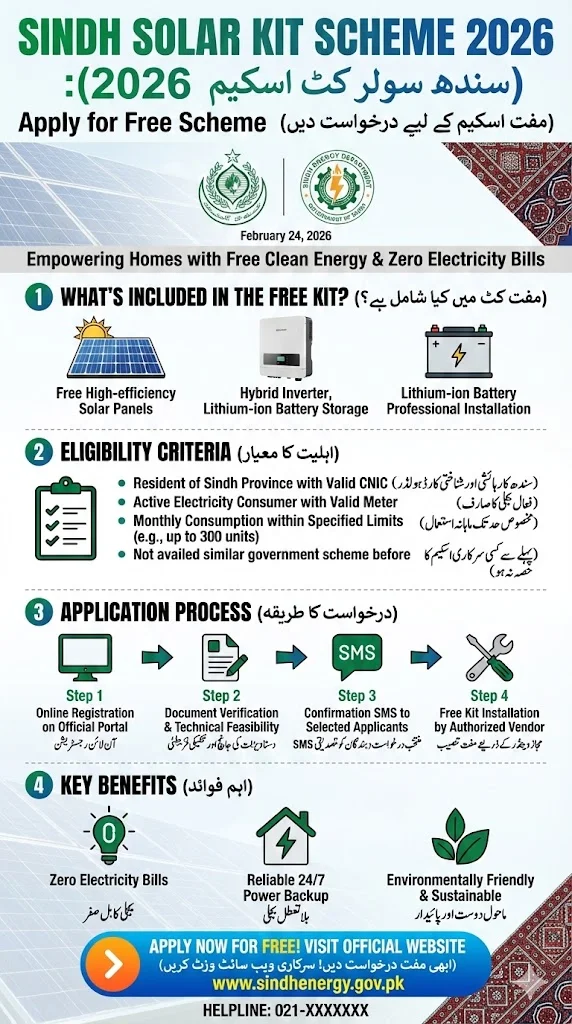
Expanding Reach: Sindh Bank Solar Finance for Broader Adoption of Renewable Energy
Recognizing that not all residents fall under the immediate “vulnerable” category but still desire to transition to solar energy, Sindh Bank Limited has introduced a dedicated Solar Finance Facility. This initiative broadens the reach of solar power, making sustainable energy more accessible to a wider segment of the population. It is an excellent option for middle-class families and small business owners seeking to mitigate high electricity bills and embrace cleaner energy sources.
The Sindh Bank Solar Finance offers a structured pathway for individuals and businesses to invest in solar technology, complementing the free Sindh Solar Kit Scheme 2026. This facility helps bridge the financial gap, allowing more people to benefit from renewable energy without the upfront financial burden. It represents a significant step towards enabling broader adoption of clean energy across Sindh, fostering economic independence through reduced utility costs and contributing to environmental preservation.
Applicants for the Sindh Bank Solar Loan must provide a set of essential documents to facilitate the process. These include a valid Computerized National Identity Card (CNIC), recent electricity bills to verify consumption patterns and address details, and proof of income such as salary slips or business bank statements. Property documents proving ownership of the premises where the solar system will be installed are also required, ensuring secure and legitimate installations and promoting responsible growth in solar energy.
Pakistan’s Green Future: The Sindh Solar Kit Scheme’s Contribution to National Targets
The Sindh Solar Kit Scheme is far more than just a relief project; it is a foundational element of Pakistan’s broader energy security strategy and its commitment to tackling climate change. By empowering over 170,000 families with independent power through these solar kits, the Sindh Government is significantly reducing the strain on the national grid and simultaneously promoting a pollution-free environment. This move is critical for the region’s sustainable development and exemplifies a forward-thinking approach to energy policy.
This project substantially contributes to Pakistan’s ambitious national target of reaching 45 gigawatts (GW) of solar capacity by 2030. Each Solar Home System installed helps to collectively boost the renewable energy contribution, positioning Sindh as a frontrunner in the crucial transition towards a greener energy future. The long-term impact of such initiatives will be transformative, fostering economic growth, enhancing energy resilience, and championing environmental stewardship across the province and the nation.
Frequently Asked Questions (FAQs) About the Sindh Solar Kit Scheme 2026
Q1: What is the primary objective of the Sindh Solar Kit Scheme 2026?
A1: The primary objective is to provide free solar home systems to vulnerable households in electricity-deprived rural areas of Sindh, specifically BISP beneficiaries and flood-affected families, fostering energy independence.
Q2: Who are the main partners in implementing the Sindh Solar Kit Scheme?
A2: The Sindh Government, through the Sindh Energy Department, is partnering with HANDS Pakistan for the effective implementation and distribution of the solar kits.
Q3: Is there a cost involved for the beneficiaries receiving the free solar kits?
A3: No, for eligible BISP beneficiaries and flood-affected families identified through government surveys, the solar kits are distributed completely free of cost as a part of the relief and upliftment effort.
Q4: How can a household verify their eligibility for a free solar kit under the scheme?
A4: Eligible BISP beneficiaries are automatically screened through existing databases. Others can inquire at the nearest HANDS Pakistan field office or a local desk of the Sindh Energy Department.
Q5: What components are typically included in a Solar Home System (SHS) kit from this scheme?
A5: A typical SHS kit generally includes a solar panel for energy generation, a battery for storing excess energy, LED bulbs for efficient lighting, and a charging port for mobile devices.
Q6: What is the national goal for solar capacity that this Sindh Solar Kit Scheme contributes to?
A6: The scheme significantly contributes to Pakistan’s ambitious national target of achieving 45 gigawatts (GW) of solar capacity by the year 2030, marking a major step towards renewable energy.
Q7: Is there an option for non-vulnerable families to acquire solar systems through financing?
A7: Yes, Sindh Bank Limited offers a dedicated Solar Finance Facility for middle-class families and small business owners who wish to invest in solar energy solutions.
Conclusion: A Brighter, Sustainable Future for Rural Sindh
The Sindh Solar Kit Scheme 2026 stands as a testament to the Sindh Government’s commitment to energy equity and sustainable development. By providing free solar home systems to over 170,000 vulnerable and off-grid households, the initiative has not only addressed immediate energy needs but also laid a crucial foundation for long-term socio-economic upliftment. This widespread distribution of clean, renewable energy reduces reliance on the national grid, mitigates pollution, and empowers communities with reliable power for daily life, education, and economic activities. The collaboration between the Sindh Energy Department and HANDS Pakistan, alongside the innovative Sindh Bank Solar Finance, ensures a comprehensive approach to solar adoption across the province. The scheme’s considerable contribution to Pakistan’s ambitious 45 GW solar target by 2030 underscores its significance as a national model for transitioning towards a greener, more resilient energy future. The ongoing impact of the Sindh Solar Kit Scheme promises a brighter, more sustainable future for countless rural families across Sindh.