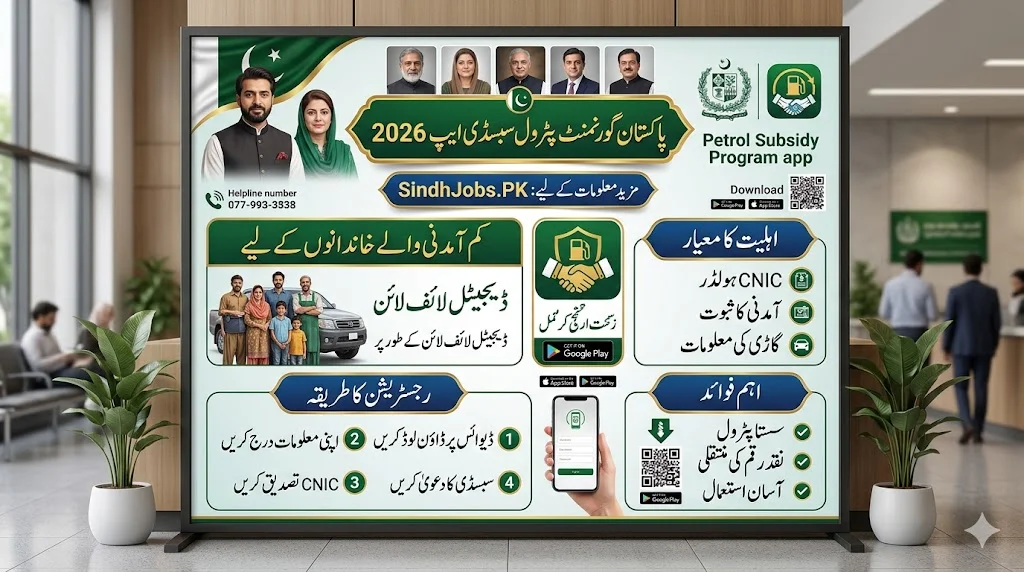
Sindh Government Announces Targeted Relief for Motorcyclists Amid Surging Petrol Prices
Sindh Government Announces monthly Rs2000 Subsidy for Motorcyclists Amid Rising Petrol Prices, The Sindh government has announced a significant monthly subsidy of Rs2,000 for registered motorcyclists across the province, a crucial step in alleviating the burden of rising petrol prices. This initiative comes as part of a broader relief package designed to counter the severe economic impact of an ongoing energy crisis and unprecedented increases in fuel costs. The measure aims to provide direct financial support to daily commuters who rely heavily on two-wheelers for their livelihoods and transportation.
Addressing the Impact of Surging Petrol Prices
The decision follows a series of sharp increases in petrol prices, which have pushed fuel costs to record highs. Just recently, the price of petrol was further increased by Rs137 per litre, reaching a staggering Rs458.4 per litre. This marks a substantial hike, driven partly by an increased petroleum levy of Rs160.61 per litre, as decided by Prime Minister Shehbaz Sharif. These rising prices have created immense pressure on the provincial economy and its citizens.
Key Details of the Subsidy Program for Motorcyclists
Sindh Chief Minister Murad Ali Shah, addressing a press conference in Karachi, elaborated on the subsidy program for motorcyclists. He confirmed that each registered motorcyclist would receive Rs2,000 directly. The application process is expected to become operational within two to three days, with subsidies linked to national identity cards (CNICs) and registered motorcycles. This will help ensure the relief reaches the intended beneficiaries efficiently.
To further facilitate beneficiaries, the CM announced that motorcycle transfers would now be free of charge, allowing owners to register their vehicles in their own names without additional cost. A component of this relief package includes a Rs100 per litre subsidy, and the first transfers are anticipated to be completed within 15 days. Citizens are advised to check their motorcycle registration status on the Excise Department’s website for eligibility.
Broader Relief Efforts for Transport and Agriculture Sectors
Beyond motorcyclists, the Sindh government’s relief package extends to other vital sectors. Public transport and goods transport operators are also set to receive substantial monthly subsidies, ranging from Rs70,000 to Rs100,000. This measure is critical for maintaining affordability in public travel and mitigating supply chain costs impacted by rising petrol prices.
Small farmers, who often bear the brunt of increased operational costs due to diesel prices, will also receive support. The government has set a minimum wheat price of Rs3,500 per maund and introduced a Rs1,500 per acre subsidy for farmers cultivating up to 2 million acres. Payments to eligible farmers are scheduled to commence on April 6, providing timely financial assistance to the agricultural community. You can find more details on these benefits at NewSchemes.com.
Navigating the Challenges of Rising Fuel Costs
The cumulative increase in petrol prices within the last month stands at 63%, while high-speed diesel has seen a 75% surge. These figures underscore the severity of the challenge confronting daily commuters and businesses. CM Murad Ali Shah noted that petrol would not be available at lower rates at fuel stations, necessitating direct financial support through the subsidy programs.
Sindh has a considerable number of motorcycles, approximately 6.7 million, many of which are not registered in the actual owner’s name. The CM highlighted the need for individuals to regularize their registrations to benefit from the subsidy. This move will not only ensure targeted relief but also improve the provincial vehicle registration database.
Inter-Provincial Coordination and Targeted Relief
The provincial government’s initiative aligns with broader discussions on energy imports and subsidy measures. CM Murad Ali Shah stressed coordination with the federal government, noting that provincial leaders participated in a historic meeting chaired by President Asif Ali Zardari. These discussions were crucial for formulating a comprehensive national response to the energy crisis.
Initially, subsidies were extended broadly, but guidance from the International Monetary Fund (IMF) emphasized targeting relief towards those most affected by rising fuel costs. The long deliberations ultimately led to the decision to provide targeted subsidies to motorcyclists, small farmers, and transport operators, ensuring that assistance reaches those experiencing the most significant economic impact of rising petrol prices.
Punjab and Islamabad Announce Concurrent Initiatives
In a parallel development, Punjab Chief Minister Maryam Nawaz announced free public transport across all cities in Punjab. This includes services like the Orange Line Train, Metro Bus, Speedo Bus, and Green Electro Bus, where passengers will no longer need to purchase tickets. This significant step aims to ease the travel burden on citizens in Punjab, providing an alternative form of subsidy through cost-free public services.
Additionally, Punjab will provide direct financial support to its agriculture sector, offering farmers a subsidy of Rs100 per litre of diesel per acre. Motorcyclists in Punjab will also benefit from a subsidy of Rs100 on 20 litres of fuel for each registered bike owner. These measures in both provinces highlight a concerted effort to mitigate the economic pressures on citizens due to rising petrol prices.
The Sindh government will independently administer its program for a one-month trial period, following discussions on various proposals. The final plan involves a multi-pronged approach, with some components administered provincially and others federally, but with funding channeled to the provinces to empower local implementation. These initiatives are crucial steps in providing much-needed relief amid the ongoing financial challenges.
Frequently Asked Questions (FAQs)
- Who is eligible for the Sindh government’s monthly Rs2,000 subsidy?
Registered motorcyclists across the Sindh province are eligible. The subsidy will be linked to their national identity cards (CNICs) and registered motorcycles. - How do I apply for the motorcyclist subsidy?
The application process is expected to become operational within two to three days. Citizens should check the Excise Department’s website for updates and to verify their motorcycle registration. - What other subsidies are being offered in Sindh?
Public transport and goods transport operators will receive monthly subsidies from Rs70,000 to Rs100,000. Small farmers will receive a minimum wheat price of Rs3,500 per maund and a Rs1,500 per acre subsidy. - When will the farmer subsidies begin?
Payments to eligible farmers are scheduled to commence on April 6. - Why are motorcyclist transfers free of charge in Sindh?
This measure is intended to facilitate owners in registering their vehicles in their own names, ensuring they can access the announced subsidies efficiently and without additional cost. - How much have petrol prices increased recently?
Petrol prices have increased by Rs137 per litre, reaching Rs458.4. Cumulatively, petrol prices have risen by 63% and high-speed diesel by 75% within the last month. - What measures has Punjab announced to combat rising fuel prices?
Punjab has announced free public transport across all cities and a Rs100 per litre diesel subsidy per acre for farmers. Motorcyclists in Punjab will also receive a Rs100 subsidy on 20 litres of fuel.
Conclusion
The Sindh government’s announcement of a monthly Rs2,000 subsidy for motorcyclists, alongside broader aid for transport operators and farmers, represents a critical intervention to ease the economic strain caused by rising petrol prices. This targeted relief package, developed in coordination with federal entities and guided by international advice, aims to provide direct and tangible support to the most affected segments of society. While the challenge of surging petrol prices remains significant, these provincial initiatives, mirrored by similar efforts in Punjab, mark a determined effort to mitigate the immediate impact and provide citizens with much-needed financial respite. The outcome is expected to bring considerable relief to millions of individuals and families struggling with the escalating cost of living and essential services.