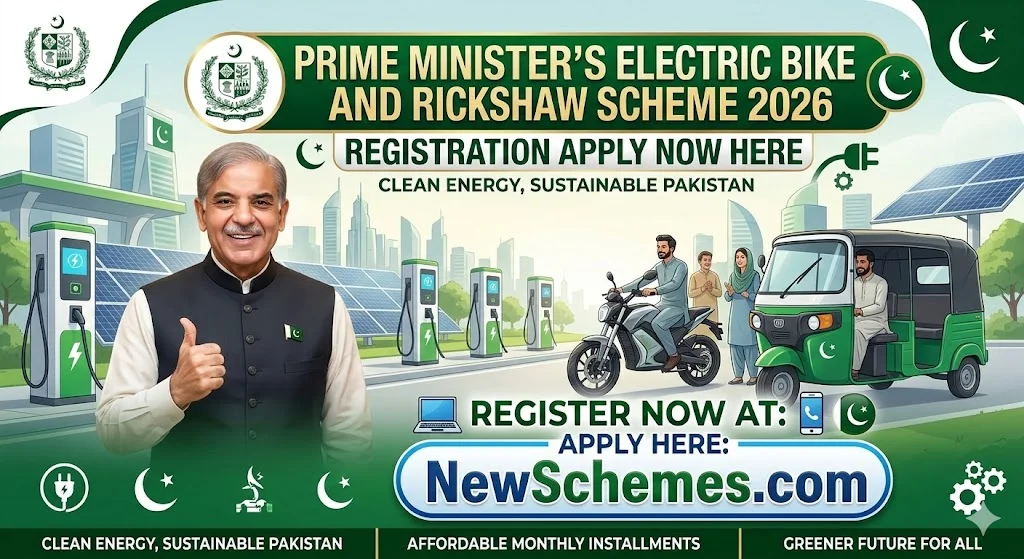
Prime Minister’s Electric Bike & Rickshaw Scheme 2026: Driving Sustainable Mobility in Pakistan
The Prime Minister’s Electric Bike & Rickshaw Scheme 2026 represents a landmark federal government initiative aimed at revolutionizing Pakistan’s transportation sector. Launched to promote affordable electric vehicles, including both electric bikes and rickshaws, this major subsidy program offers substantial financial support to buyers. Its core objective is to significantly lower the purchase costs of these eco-friendly alternatives, thereby encouraging a widespread adoption of clean, sustainable transportation across the nation.
This initiative is trending significantly in 2026, primarily due to its projected economic and environmental impacts. By making electric mobility more accessible, the government seeks to address pressing issues such as fuel import bills, urban air pollution, and the growing demand for affordable public and personal transport. The scheme underscores a national commitment to a greener, more sustainable future for Pakistan.
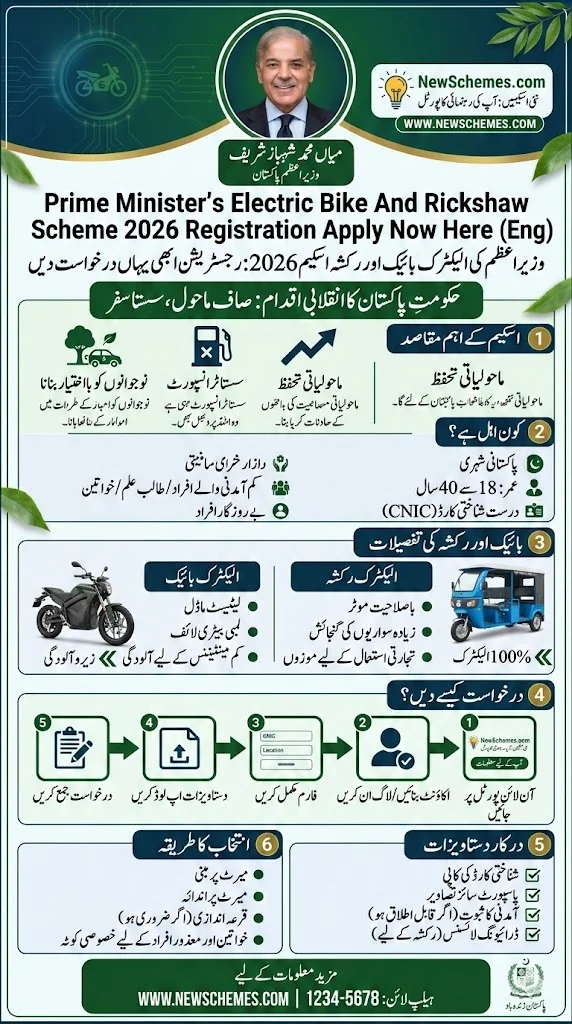
Unpacking the Prime Minister’s Electric Bike & Rickshaw Scheme
The Prime Minister’s Electric Bike & Rickshaw Scheme is structured as a comprehensive subsidy program, strategically designed to overcome the initial cost barrier associated with electric vehicles. Under this initiative, eligible individuals and small businesses can access significant financial incentives, making the transition to electric bikes and rickshaws economically viable. This support directly reduces the upfront expenditure, which has historically been a deterrent for many potential buyers.
Government officials have highlighted that the scheme targets widespread adoption across various demographics. From daily commuters seeking cost-effective personal transport to rickshaw drivers looking for cheaper operational alternatives, the initiative aims to benefit a broad segment of the population. The focus is not just on reducing individual costs but also on fostering a robust domestic market for electric vehicles.
The Rationale Behind Promoting Electric Bikes & Rickshaws
The push for electric bikes and rickshaws stems from a multi-faceted approach to national development. Economically, adopting electric vehicles is expected to yield substantial savings on the national fuel import bill, a significant burden on the economy. By reducing reliance on fossil fuels, Pakistan can achieve greater energy independence and allocate resources to other critical sectors.
Environmentally, the scheme aligns with Pakistan’s commitments to combat climate change and reduce urban air pollution. Electric vehicles produce zero tailpipe emissions, directly contributing to cleaner air in cities and mitigating the health hazards associated with conventional combustion engines. The government, according to a spokesperson from the Ministry of Climate Change, anticipates a measurable improvement in air quality metrics over the next few years.
Socially, these affordable electric vehicles can provide accessible and cheaper transportation options for millions. For many, high fuel costs make daily commutes and livelihoods challenging. The Prime Minister’s Electric Bike & Rickshaw Scheme offers a pathway to reduce operational expenses for rickshaw drivers and provide a more economical mode of transport for citizens.
Key Features and Benefits of this Electric Vehicle Subsidy Initiative
The electric vehicle subsidy initiative provides a capped financial incentive, which could be a percentage of the vehicle’s cost or a fixed amount, directly to qualifying buyers. Eligibility criteria typically prioritize first-time buyers and those who meet certain income thresholds, though broad access is a key goal. The scheme is inclusive, ensuring that various segments of society can benefit from the transition to electric mobility.
Beyond the immediate financial relief, the long-term benefits are substantial. Owners of electric bikes and rickshaws will experience significantly lower running costs due to cheaper electricity compared to petrol. Maintenance expenses are also anticipated to be lower for electric vehicles, which have fewer moving parts than their internal combustion counterparts. More details about specific offerings can sometimes be found on platforms like NewSchemes.com.
Implementation Challenges and the Road Ahead for Electric Mobility
While the Prime Minister’s Electric Bike & Rickshaw Scheme is ambitious, its successful implementation hinges on addressing several challenges. One critical aspect is the development of a robust charging infrastructure across the nation. The availability of accessible and reliable charging stations is paramount to alleviating range anxiety and ensuring convenience for users of electric bikes and rickshaws.
Another significant consideration is the sustainable management of batteries, from manufacturing to disposal and recycling. Ensuring a local supply chain for components and promoting domestic manufacturing will also be key to the scheme’s long-term viability and job creation potential. The Ministry of Industries and Production has reportedly outlined plans to encourage local assembly and production lines.
The Future of Sustainable Transportation with Electric Bikes and Rickshaws
The Prime Minister’s Electric Bike & Rickshaw Scheme is not merely a short-term financial incentive; it’s a foundational step towards a fundamentally transformed transportation landscape in Pakistan. The initiative aims to shift public perception towards eco-friendly mobility solutions, fostering a culture of sustainability. It lays the groundwork for further innovation and investment in the electric vehicle sector, including the potential for expansion into other vehicle categories.
Experts suggest that the success of these electric vehicle subsidy initiatives could serve as a model for other developing nations striving for sustainable urban transport. As the scheme progresses, its economic and environmental benefits are expected to become increasingly evident, contributing significantly to Pakistan’s efforts in achieving its climate goals and improving the quality of life for its citizens. Information on related government projects and schemes is frequently updated on portals such as NewSchemes.com.
Frequently Asked Questions (FAQs)
1. What is the Prime Minister’s Electric Bike & Rickshaw Scheme 2026?
It’s a federal government subsidy initiative in Pakistan designed to promote the adoption of electric bikes and rickshaws by offering significant financial support to buyers, making these vehicles more affordable.
2. Who is eligible for the subsidy under this electric vehicle scheme?
Eligibility criteria typically include first-time buyers and individuals or small businesses meeting certain income or usage requirements. The goal is broad access to foster widespread adoption.
3. What are the main benefits of opting for electric bikes and rickshaws through this scheme?
Key benefits include significantly reduced purchase costs, lower running expenses (due to cheaper electricity), less maintenance, zero tailpipe emissions, and a contribution to cleaner air and a greener environment.
4. How does the Prime Minister’s Electric Bike & Rickshaw Scheme impact Pakistan’s economy?
The scheme is expected to reduce the national fuel import bill, stimulate local manufacturing and assembly of electric vehicles, and create new jobs within the green transport sector.
5. What is being done to support electric vehicle infrastructure?
The government is focused on developing a robust charging infrastructure across major cities and highways to ensure convenient access for electric bike and rickshaw users, alongside promoting battery technology and recycling.
6. When did the Prime Minister’s Electric Bike & Rickshaw Scheme officially launch?
The scheme became a key trending initiative in 2026, indicating its recent launch or significant expansion leading into the year.
7. How can I learn more about applying for the electric bike and rickshaw subsidy?
Detailed application procedures, specific subsidy amounts, and required documentation are typically announced through official government channels, relevant ministries’ websites, and verified news sources like NewSchemes.com.
Conclusion
The Prime Minister’s Electric Bike & Rickshaw Scheme 2026 stands as a pivotal step in Pakistan’s journey towards sustainable development and eco-friendly mobility. By significantly reducing the financial barriers to owning electric bikes and rickshaws, the government has launched a powerful incentive for cleaner transportation. This initiative not only promises substantial economic relief through reduced fuel costs and local industrial growth but also offers a tangible solution to combat urban air pollution and climate change. As the scheme progresses, its enduring impact on individual livelihoods and the nation’s environmental health is poised to solidify Pakistan’s position as a forward-thinking advocate for sustainable transportation.