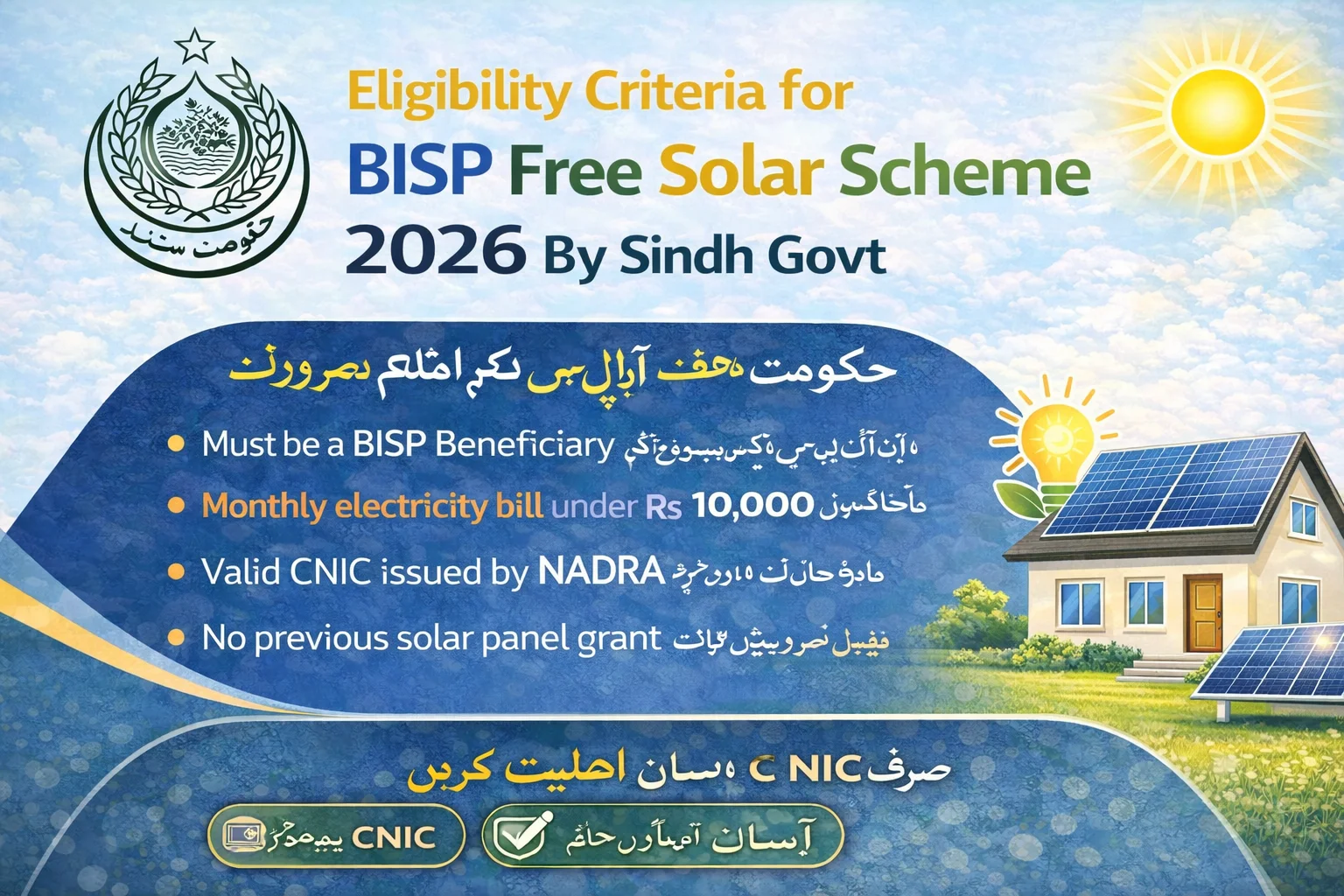
Guide to the SRSO-BISP Free Solar Scheme 2026: Claim Your Solar Home System Today
The SRSO-BISP Free Solar Scheme 2026 has emerged as a revolutionary step toward energy independence for the most vulnerable communities in Sindh. By tackling the dual challenges of extreme summer heatwaves and mounting electricity costs, the Government of Sindh has partnered with the World Bank and the Sindh Rural Support Organization (SRSO) to launch the Sindh Solar Energy Project (SSEP). Providing free, high-quality solar home systems to those registered under the Benazir Income Support Programme (BISP) is transforming lives in rural Sindh. For those seeking additional government-sector opportunities or public welfare updates, visiting NewSchemes.com serves as a helpful resource for navigating various regional initiatives.
Understanding the SRSO-BISP Free Solar Scheme 2026 Objectives
The SRSO-BISP Free Solar Scheme 2026 aims to bridge the energy gap for thousands of households. Funded by a multi-million-dollar World Bank grant, this initiative relies on the extensive rural network of the SRSO to reach remote areas. The project is specifically tailored for families identified by the National Socio-Economic Registry (NSER) as living below the poverty line.
By solarizing these homes, the government effectively provides a shield against the volatile and high cost of traditional grid electricity, ensuring that light and basic cooling reach those who need it most. This initiative represents a significant stride in aligning Pakistan’s energy policy with sustainable development goals.
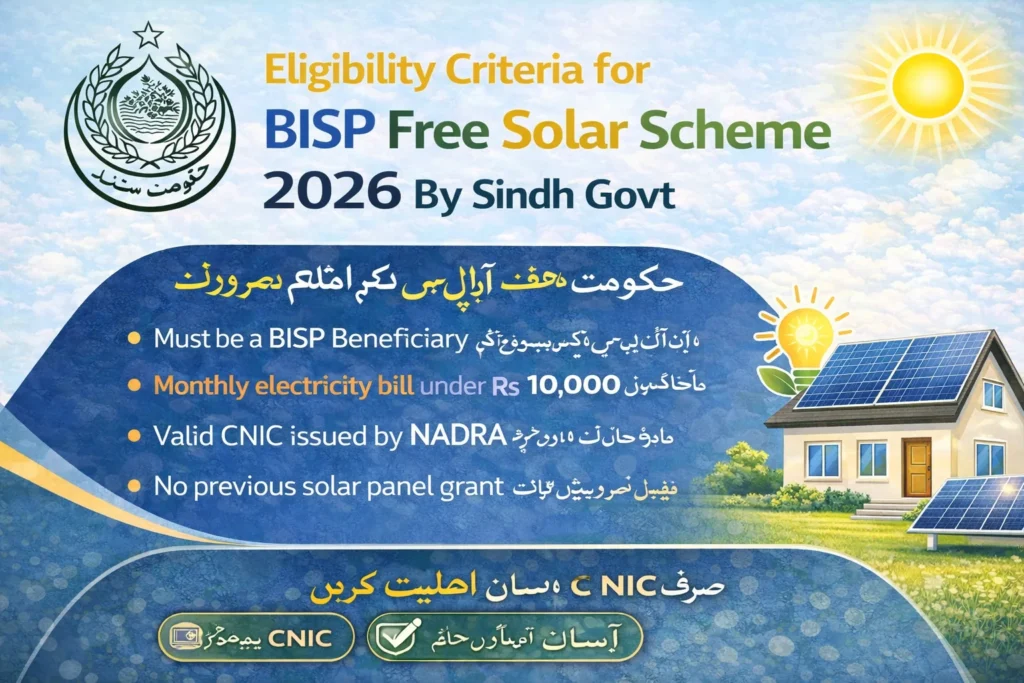
Eligibility Criteria for the SRSO-BISP Free Solar Scheme 2026
To qualify for the SRSO-BISP Free Solar Scheme 2026, applicants must fall under the criteria set by the Sindh Energy Department. Development experts often highlight that targeting the most impoverished districts is critical for long-term climate resilience.
Priority is currently given to residents in flood-affected and high-poverty regions. This includes specific districts such as Shikarpur, Khairpur, Jacobabad, Larkano, Kamber-Shahdadkot, and Kashmore. Furthermore, candidates must be active BISP beneficiaries with a valid CNIC. Preference is given to households with low Poverty Means Test (PMT) scores and those residing in off-grid villages where traditional infrastructure remains absent.
Key Eligibility Pillars for the SRSO-BISP Free Solar Scheme 2026
1. BISP Beneficiary Status: Active enrollment in the Benazir Income Support Programme is a fundamental requirement. This ensures that the scheme reaches those demonstrably in need, aligning with the program’s core objective of poverty alleviation. Participants can verify their BISP status by texting their CNIC number to 8171.
2. Geographical Focus for the SRSO-BISP Free Solar Scheme 2026: While the initiative aims to expand, initial phases concentrate on specific districts. These are areas that have historically experienced significant developmental challenges and are often more susceptible to the impacts of climate change.
3. Poverty Score and Grid Access: Households with lower PMT scores and those lacking access to the national electricity grid are prioritized. This ensures the scheme addresses the most acute energy poverty and provides a viable alternative where conventional power is unavailable or prohibitively expensive.
What is Inside the SRSO-BISP Free Solar Scheme 2026 Kit?
The SRSO-BISP Free Solar Scheme 2026 provides hardware that adheres to strict international standards to ensure longevity in the harsh Sindh climate. Unlike cheaper market alternatives, these kits are engineered for high performance and durability, offering a sustainable energy solution for off-grid households.
Each “Power Pack” typically includes a high-efficiency solar panel treated for extreme heat. It also contains a durable deep-cycle battery for overnight storage and a professional-grade charge controller to manage energy flow. Additionally, recipients receive energy-efficient DC fans, LED lights for safe indoor illumination, and dedicated mobile charging ports, enhancing daily life significantly. If you are looking for more information on development projects or career-related updates, be sure to check NewSchemes.com for periodic insights.
Components of the SRSO-BISP Free Solar Scheme 2026 Power Pack
1. Solar Panel Module: Designed to withstand high temperatures and variable weather conditions, the solar panel converts sunlight directly into electrical energy. Its efficiency is crucial for maximizing power generation even during peak heat.
2. Battery Storage Unit: This deep-cycle battery is essential for storing excess solar energy generated during the day. It provides power throughout the night, enabling lighting and the use of small appliances when the sun isn’t shining.
3. Charge Controller: The nerve center of the system, the charge controller regulates the flow of electricity from the solar panels to the battery. It prevents overcharging and deep discharging, thereby extending the battery’s lifespan and ensuring safe operation.
4. Energy-Conserving Accessories: The provision of efficient DC fans, bright LED lights, and mobile charging ports directly addresses the daily needs of households. These components are selected for their low power consumption, maximizing the utility of the generated solar energy.
How to Register for the SRSO-BISP Free Solar Scheme 2026
The application process for the SRSO-BISP Free Solar Scheme 2026 is built on transparency to eliminate corruption and ensure equitable distribution. First, applicants should confirm their status by messaging their CNIC to 8171. This initial step verifies their eligibility for BISP benefits.
Once confirmed, they must visit their local Local Support Organization (LSO) office to request the official verification form. Essential documents include your original CNIC, your BISP benefit proof, and a current photograph of your home. Following submission, an SRSO field officer will conduct a physical inspection to confirm the household’s specific needs and installation logistics, ensuring the correct placement and setup of the solar system.
Step-by-Step Registration for the SRSO-BISP Free Solar Scheme 2026
1. BISP Status Verification: The first and most critical step is confirming your active BISP beneficiary status. This is done by sending your Computerized National Identity Card (CNIC) number via SMS to the designated number, 8171.
2. Visiting the LSO for the SRSO-BISP Free Solar Scheme 2026: If your BISP status is confirmed, proceed to your nearest Local Support Organization (LSO) office. Here, you will obtain the official application form for the solar scheme.
3. Document Submission: Gather all required documents meticulously. This includes your original CNIC, proof of your BISP enrollment (often a payment slip or similar document), and a recent photograph of your residence.
4. Field Verification Process: After submitting your application and documents, an SRSO field officer will visit your home. This inspection is crucial for assessing the suitability of your location for solar installation and confirming your household’s energy needs.
Socio-Economic Impact of the SRSO-BISP Free Solar Scheme 2026
The SRSO-BISP Free Solar Scheme 2026 is fundamentally shifting the economic landscape of rural households. Officials have noted that by eliminating electricity bills, families can redirect their limited income toward improved nutrition, better education for their children, and essential household expenses.
Beyond finances, the project offers significant health benefits by replacing hazardous kerosene lamps, which often cause respiratory ailments and fire hazards, with clean, safe LED light. Furthermore, the registration process is designed to empower women, as the solar system is typically documented in the female household head’s name, strengthening her decision-making role and agency within the family. The initiative has been praised by community leaders for its comprehensive approach to poverty reduction and sustainable development.
Quantifiable Benefits of the SRSO-BISP Free Solar Scheme 2026
- Reduced Household Expenses: Electricity bills, a significant burden for low-income families, are eliminated. This frees up approximately 10-15% of a household’s monthly income for other necessities, according to preliminary reports.
- Improved Health Outcomes: The switch from kerosene lamps to LED lighting reduces indoor air pollution, thereby decreasing respiratory illnesses. It also eliminates the risk of burns and fires associated with open flames.
- Enhanced Educational Opportunities: Reliable lighting allows children to study after sunset, significantly improving their academic prospects. Access to mobile charging also keeps them connected to educational resources.
- Economic Empowerment: The energy provided enables small income-generating activities, such as operating sewing machines or charging mobile phones for others, further boosting household income.
Frequently Asked Questions (FAQs) about the SRSO-BISP Free Solar Scheme 2026
1. How can I check if I am eligible for the SRSO-BISP Free Solar Scheme 2026?
You must be an active beneficiary of the Benazir Income Support Programme (BISP). Confirm your BISP status by sending your CNIC number via SMS to 8171. If eligible, you will be directed on how to proceed with the solar scheme application.
2. Which districts are currently prioritized for the SRSO-BISP Free Solar Scheme 2026?
Initial phases focus on districts heavily impacted by poverty and recent floods. These include Shikarpur, Khairpur, Jacobabad, Larkano, Kamber-Shahdadkot, and Kashmore. However, the scheme aims for wider coverage over time.
3. What documents are required to apply for the SRSO-BISP Free Solar Scheme 2026?
You will need your original CNIC, proof of your BISP enrollment, and a recent photograph of your house. Specific forms will be provided at the LSO office.
4. Who installs the solar home system under the SRSO-BISP Free Solar Scheme 2026?
Installation is carried out by trained technicians affiliated with the Sindh Rural Support Organization (SRSO). They ensure safe and proper setup according to established guidelines.
5. What should I do if my LSO office denies my application for the SRSO-BISP Free Solar Scheme 2026?
If you believe you meet all the criteria and were unfairly denied, you can inquire about an appeals process at the LSO office or contact SRSO directly for clarification and guidance on potential next steps. For further information on government schemes, keep an eye on NewSchemes.com.
Conclusion
The SRSO-BISP Free Solar Scheme 2026 represents a significant and tangible effort by the Sindh government to improve the lives of its most vulnerable citizens. By providing access to clean, reliable energy, the scheme addresses critical needs related to cost of living, health, and education. The partnership between the Government of Sindh, BISP, SRSO, and the World Bank demonstrates a commitment to sustainable development and poverty alleviation, with the ultimate goal of creating energy-secure and empowered communities across the province. The positive socio-economic impacts are already being felt, paving the way for a brighter and more sustainable future for thousands of households.