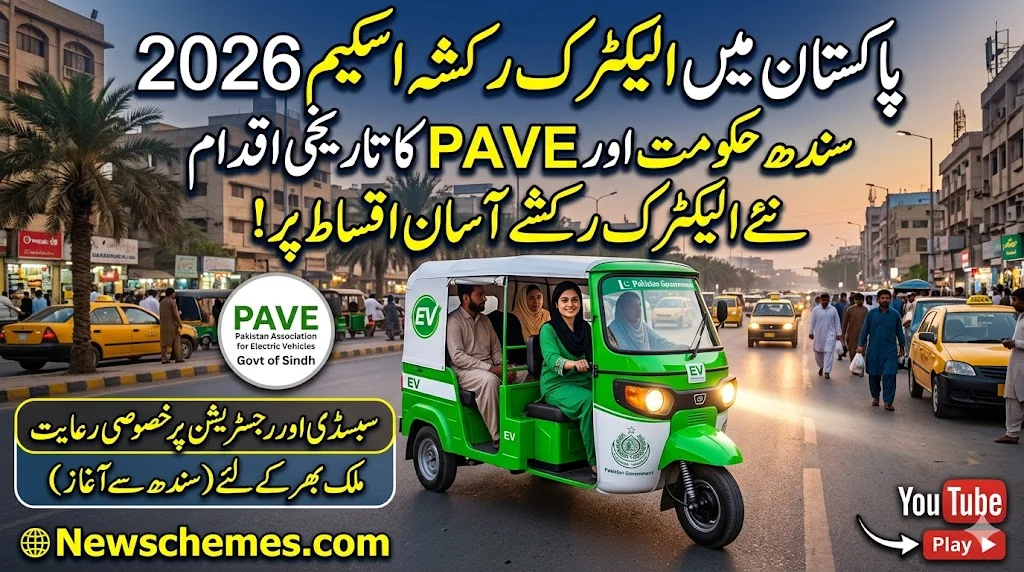
Electric Rickshaw Scheme in Pakistan 2026 (PAVE & Sindh Government)
Pakistan is stepping into a cleaner and more sustainable transport future with the Electric Rickshaw Scheme 2026, launched through collaboration between Pakistan Association of Automotive Parts & Accessories Manufacturers (PAAPAM / PAVE initiative) and the Government of Sindh. This program is designed to reduce fuel dependency, create jobs, and promote environmentally friendly mobility solutions across urban and rural areas.
What is the Electric Rickshaw Scheme 2026?
The Electric Rickshaw Scheme 2026 is a government-backed initiative aimed at introducing battery-powered rickshaws (E-rickshaws) as an alternative to traditional petrol and CNG rickshaws.
The project is supported by:
- Pakistan Association of Automotive Parts & Accessories Manufacturers (PAVE program)
- Government of Sindh
- Local manufacturers and financial institutions
The scheme focuses on:
- Reducing air pollution
- Lowering fuel import costs
- Providing affordable employment opportunities
Key Features of the Scheme
1. Subsidized Electric Rickshaws
The government offers financial assistance and subsidies to make electric rickshaws affordable for drivers and small business owners.
2. Interest-Free or Low-Interest Loans
Applicants may get:
- Easy installment plans
- Bank financing options
- Microfinance support
3. Eco-Friendly Transport
Electric rickshaws produce:
- Zero emissions
- Less noise pollution
- Lower carbon footprint
4. Local Manufacturing Support
Through PAVE, local industries are encouraged to manufacture parts domestically, boosting Pakistan’s auto sector.
Click Here And Apply Now
Eligibility Criteria
To apply for the Electric Rickshaw Scheme 2026, applicants must:
- Be a Pakistani citizen
- Have a valid CNIC
- Possess a driving license (Learner or Permanent)
- Belong to low or middle-income groups
- Preferably unemployed or seeking self-employment
Special quotas may be allocated for:
- Women
- Youth
- Differently-abled individuals
How to Apply for the Electric Rickshaw Scheme
Follow these steps to register:
Step 1: Online Registration
Visit the official Sindh government or PAVE portal (expected launch in 2026).
Step 2: Submit Required Documents
- CNIC copy
- Driving license
- Proof of residence
- Income details
Step 3: Verification Process
Authorities will review applications and shortlist eligible candidates.
Step 4: Balloting / Selection
If applications exceed available units, a transparent balloting system will be used.
Step 5: Vehicle Delivery
Selected applicants will receive their electric rickshaw through partnered vendors.
Benefits of Electric Rickshaws in Pakistan
Economic Benefits
- Lower running cost than petrol rickshaws
- Daily savings on fuel
- Increased profit margins for drivers
Environmental Benefits
- Reduced air pollution in cities like Karachi
- Helps combat climate change
Social Benefits
- Job creation for thousands of unemployed youth
- Promotes clean and modern urban transport
Challenges & Considerations
While promising, the scheme may face some challenges:
- Limited charging infrastructure
- Battery replacement costs
- Initial awareness among drivers
However, the Government of Sindh plans to introduce charging stations and incentives to address these issues.
Future of Electric Vehicles in Pakistan
The Electric Rickshaw Scheme is part of Pakistan’s broader push toward electric mobility, aligned with national EV policies.
With continued support from organizations like Pakistan Association of Automotive Parts & Accessories Manufacturers, the country is expected to see:
- Expansion of electric bikes and cars
- Growth in EV infrastructure
- Increased foreign and local investment
Conclusion
The Electric Rickshaw Scheme 2026 in Pakistan is a major step toward sustainable development, economic empowerment, and environmental protection. By combining government support with private sector collaboration, this initiative has the potential to transform the transport sector—especially in cities like Karachi.
If implemented effectively, it could provide affordable mobility, reduce pollution, and create thousands of jobs, making it a win-win for both citizens and the economy.