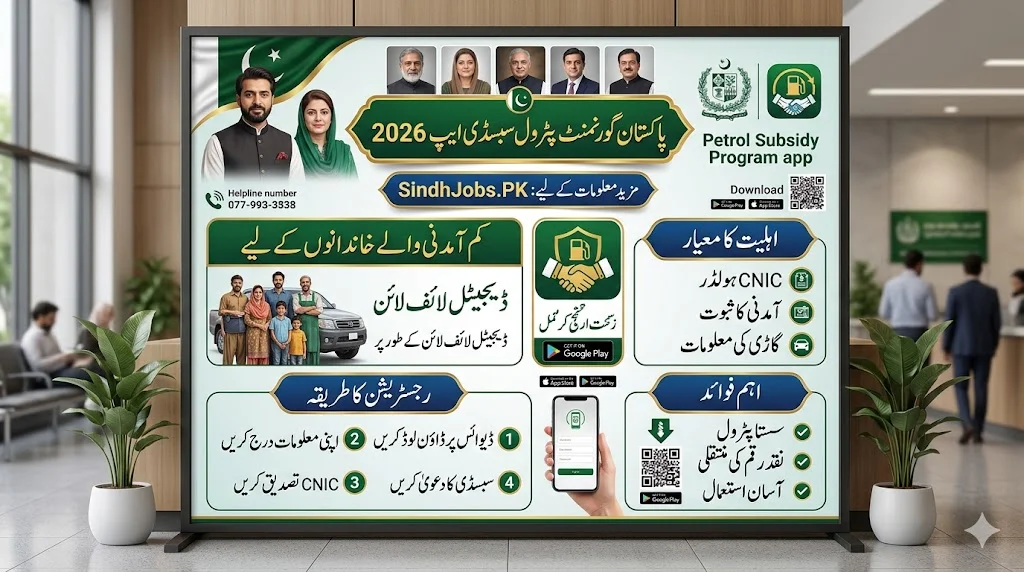
Sindh Government Rolls Out Monthly Rs2,000 Subsidy for Motorcyclists Amidst Soaring Fuel Costs
Sindh Govt Announces Monthly Rs2000 Subsidy for Motorcyclists Amid Rising Petrol Prices 2026, The Sindh govt announces monthly Rs2,000 subsidy for motorcyclists, a crucial initiative directly responding to the severe economic strain caused by escalating petrol prices and a persistent energy crisis gripping the nation. This targeted relief program also extends substantial subsidies to public transport and goods transport operators, aiming to cushion the impact of record-high fuel costs on daily commuters and the logistics sector. The provincial government’s announcement comes at a time when citizens face unprecedented challenges due to the steep increase in petroleum prices.
Navigating the Surge in Petrol Prices and Energy Crisis
Pakistan has recently witnessed a dramatic increase in fuel prices, exacerbating an already challenging economic landscape. Only a day before the subsidy announcement, petrol prices surged by Rs137 per litre, reaching a staggering record-high of Rs458.4. This significant hike followed another substantial increase of Rs55 per litre for both diesel and petrol in the preceding month. The cumulative increase in petrol prices within a month now stands at an alarming 63%, with high-speed diesel seeing a 75% rise, pushing essential goods and daily commutes out of reach for many.
The federal government’s decision to increase the petroleum levy to a record Rs160.61 per litre on petrol, exceeding international market increases, has significantly contributed to these soaring prices. This burden, which is passed directly to consumers, has necessitated urgent relief measures from provincial administrations like Sindh’s. These economic pressures highlight the critical need for initiatives like those highlighted on NewSchemes.com, which aim to provide vital support to citizens.
Targeted Subsidies for Motorcyclists in Sindh
Addressing a press conference in Karachi, Sindh Chief Minister Murad Ali Shah outlined the specifics of the monthly Rs2,000 subsidy for registered motorcyclists. This direct financial aid aims to alleviate the burden on millions of commuters who rely on motorcycles for daily transport. The Chief Minister emphasized that petrol would not be available at reduced rates at fuel stations, making direct subsidies a more viable and efficient solution.
The application process for these subsidies is set to become operational within two to three days. Crucially, the subsidies will be linked to national identity cards and registered motorcycles, ensuring transparency and preventing misuse. CM Shah further announced that motorcycle transfers would now be entirely free of charge, encouraging owners to register their vehicles in their names, a prerequisite for receiving the subsidy. He confirmed that a subsidy of Rs100 per litre would essentially be provided through the Rs2,000 payout, with first transfers anticipated within 15 days.
Ensuring Access to the Monthly Rs2,000 Subsidy
To facilitate the registration and application process, Chief Minister Shah advised citizens to verify their motorcycle registration details on the Excise Department’s official website. This proactive step ensures that all eligible individuals can benefit from the programme smoothly. The initiative is part of a broader targeted relief programme designed to support those most affected by the economic downturn. With 6.7 million registered motorcycles across Sindh, many of which are not registered in the actual owner’s name, the free transfer facility is expected to streamline the process significantly and ensure the Rs2,000 benefit reaches the intended recipients. Updates and guidelines regarding this can also be found on platforms like NewSchemes.com.
Broader Relief for Public and Goods Transport Operators
Beyond individual motorcyclists, the Sindh government has also extended its relief program to critical sectors of the economy: public transport and goods transport. These operators will receive substantial monthly subsidies ranging from Rs70,000 to Rs100,000. This measure is vital for maintaining affordable fares and controlling the cost of goods transport, which directly impacts inflation and the prices of essential commodities. By supporting these operators, the government aims to prevent a ripple effect of price increases throughout the supply chain.
Supporting Small Farmers Amidst Rising Diesel Prices
Recognizing the agricultural sector’s vulnerability to rising fuel costs, particularly for diesel, the Sindh government has also announced significant support measures for small farmers. This includes setting a minimum wheat price of Rs3,500 per maund to ensure fair compensation for their produce. Additionally, farmers cultivating up to 2 million acres will receive a Rs1,500 per acre subsidy, explicitly designed to offset losses incurred due to the escalating diesel prices. Payments to these farmers are scheduled to commence on April 6, providing timely assistance during crucial agricultural cycles.
Nationwide Subsidies and Coordination Efforts
Chief Minister Murad Ali Shah clarified that the province would independently administer the programme for a one-month trial period, following extensive discussions. The final plan comprises four components, with two administered by the provinces and one by the federal government, but with funding largely provided to the provinces. He highlighted ongoing coordination with the federal government, noting that provincial leaders participated in a historic meeting chaired by President Asif Ali Zardari to discuss energy imports and subsidy measures.
Initially, subsidies were extended broadly, but guidance from the International Monetary Fund (IMF) emphasized targeting relief toward those most affected by rising fuel costs. These long deliberations ultimately led to the decision to provide targeted subsidies to motorcyclists, small farmers, and transport operators, aiming to effectively mitigate the economic impact of escalating petroleum prices.
Punjab’s Initiatives: Free Public Transport and Farmer Subsidies
In a parallel move, Punjab Chief Minister Maryam Nawaz announced similar relief efforts across her province. Public transport in all cities of Punjab will now be free of charge, encompassing services like the Orange Line Train, Metro Bus, Speedo Bus, and Green Electro Bus. This decision offers widespread relief to daily commuters. Furthermore, Punjab will also provide direct financial support to its agriculture sector, with farmers receiving a subsidy of Rs100 per litre of diesel per acre. Motorcyclists in Punjab will similarly benefit from a subsidy of Rs100 on 20 litres of fuel for each registered bike owner, mirroring the Sindh government’s focus on this demographic. More details about such inter-provincial comparisons can be found on NewSchemes.com.
FAQs about the Sindh Government Subsidy
Q1: What is the main subsidy announced by the Sindh government?
A1: The Sindh government has announced a monthly subsidy of Rs2,000 for registered motorcyclists across the province to help them cope with rising petrol prices.
Q2: Who else will benefit from the Sindh government’s subsidy program?
A2: Public transport and goods transport operators will receive monthly subsidies ranging from Rs70,000 to Rs100,000. Small farmers are also getting support with a minimum wheat price and a per-acre subsidy for diesel.
Q3: How can motorcyclists apply for the Rs2,000 monthly subsidy in Sindh?
A3: The application process will be operational within a few days, and subsidies will be linked to national identity cards and registered motorcycles. Citizens are advised to check their motorcycle registration on the Excise Department’s website.
Q4: Will there be any charges for motorcycle transfers in Sindh for this scheme?
A4: No, Chief Minister Murad Ali Shah announced that motorcycle transfers would now be free of charge to encourage owners to register vehicles in their names, which is necessary for the subsidy.
Q5: What support is being offered to small farmers in Sindh?
A5: Small farmers will receive a minimum wheat price of Rs3,500 per maund and a Rs1,500 per acre subsidy for those with up to 2 million acres, specifically to offset losses from rising diesel prices. Payments are scheduled to begin on April 6.
Q6: Are other provinces implementing similar relief measures?
A6: Yes, Punjab Chief Minister Maryam Nawaz announced free public transport across all cities in Punjab and similar subsidies for farmers (Rs100 per litre of diesel per acre) and motorcyclists (Rs100 on 20 litres of fuel for each registered bike).
Q7: Why has the government implemented these targeted subsidies?
A7: These targeted subsidies are a direct response to the surge in petrol prices, exacerbated by an increase in the petroleum levy. They aim to alleviate the economic burden on daily commuters, transport operators, and farmers, following guidance from organizations like the IMF to ensure relief reaches those most affected.
Conclusion
The Sindh government’s decision to roll out a monthly Rs2,000 subsidy for motorcyclists, coupled with substantial aid for public/goods transport operators and small farmers, represents a critical intervention amidst an escalating energy crisis and unprecedented petrol price hikes. These targeted relief measures, mirrored by similar initiatives in Punjab, underscore a provincial-level commitment to cushioning the economic impact on vulnerable segments of society. By linking subsidies to national identity cards and registered vehicles, and facilitating free motorcycle transfers, the government aims for efficient and transparent distribution of aid. While the long-term impact on inflation and public finances remains to be seen, these immediate steps offer tangible relief to millions, reflecting a coordinated effort to stabilize living costs and support essential sectors of the economy in challenging times.