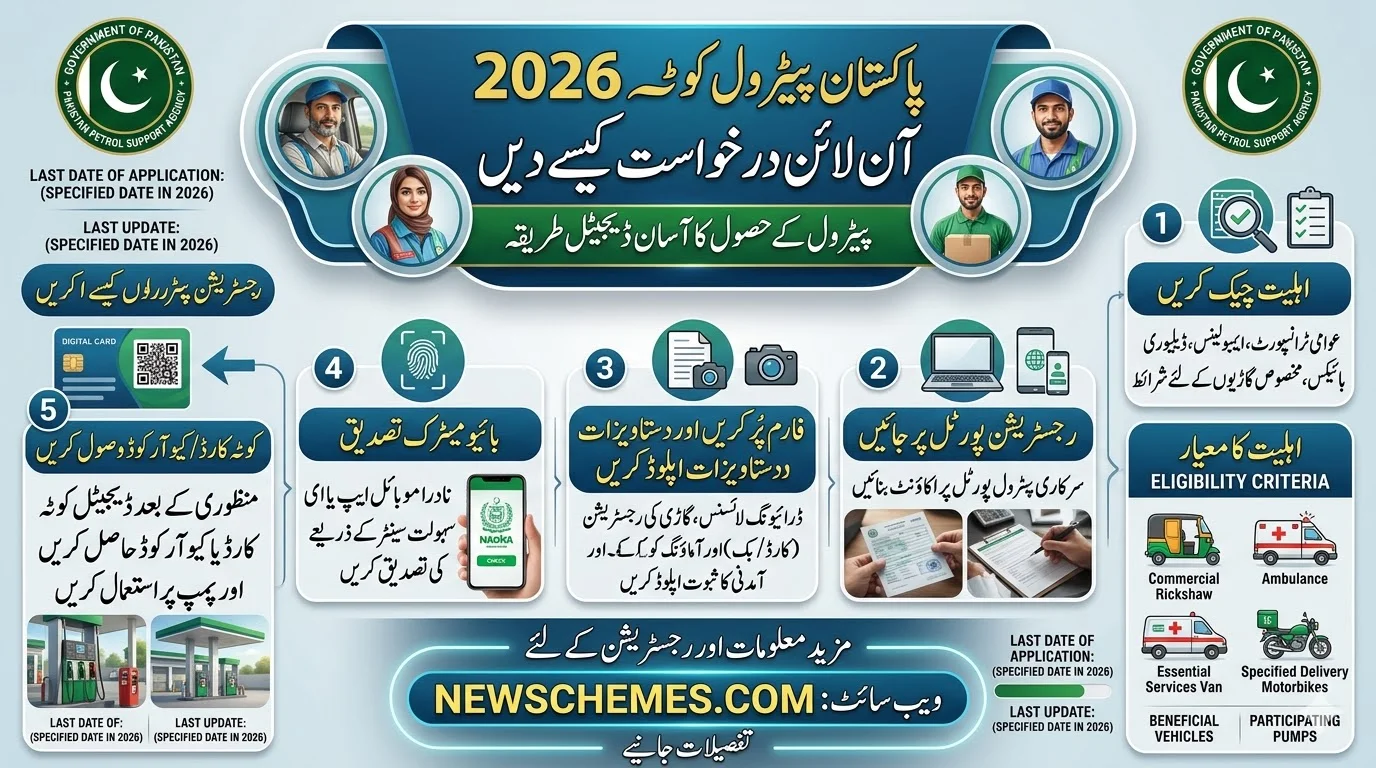
How to Apply for Pakistan Petrol Quota 2026 Online
How to Apply for Pakistan Petrol Quota 2026 Online, As global fuel prices continue to surge due to economic and geopolitical pressures, governments are introducing digital systems to manage fuel consumption and provide targeted relief. In 2026, two major initiatives stand out:
- Pakistan’s Petrol Quota System (App-Based Subsidy)
- Sri Lanka’s National Fuel Pass System
These systems aim to ensure fair fuel distribution, reduce waste, and support low-income citizens through modern digital platforms.
What Is a National Fuel Pass System?
A National Fuel Pass is a digital solution that allocates a fixed amount of fuel to registered users. Instead of unlimited purchases, citizens receive a weekly or monthly quota based on:
- Vehicle type
- Usage needs
- National fuel availability
This approach helps governments control consumption while ensuring equitable access.
Why Fuel Pass Systems Are Being Introduced in 2026
Countries like Pakistan and Sri Lanka are facing increasing pressure from global oil market instability. Key reasons include:
- Rising international oil prices
- Limited foreign exchange reserves
- High fuel import costs
- Growing domestic demand
- Need to reduce subsidy burdens
Digital fuel quota systems offer a practical and transparent solution.
Pakistan Petrol Quota System 2026 – Overview
Pakistan is preparing to launch a mobile app-based petrol quota system under the supervision of the Oil and Gas Regulatory Authority (OGRA).
Key Features
- App-based registration
- CNIC-linked quotas
- Vehicle-based fuel allocation
- Digital vouchers
- Real-time monitoring
Expected Coverage
- Motorcycles
- Rickshaws
- Small cars (under consideration)
How to Apply for Pakistan Petrol Quota 2026 Online
Once officially launched, users will be able to register through a mobile app.
Step-by-Step Process
1. Download the Official App
Available on Android and iOS platforms.
2. Create an Account
- Enter CNIC number
- Verify mobile number
3. Add Vehicle Details
- Vehicle registration number
- Vehicle type
4. Submit Application
Review and submit your details for approval.
5. Receive Fuel Quota
Your assigned quota will appear in the app dashboard.
How to Use the Fuel Quota System
After registration, accessing fuel will be simple:
At the Petrol Pump
- Generate a digital voucher in the app
- Visit a registered petrol station
- Show your QR code or voucher
- Station verifies your quota
- Fuel is dispensed accordingly
If your quota is exceeded, additional fuel access may be restricted.
Eligibility Criteria
To qualify for the petrol quota system, you must have:
- A valid CNIC
- A registered vehicle
- An active mobile number
- Pakistani citizenship
Priority Groups
- Low-income individuals
- Daily commuters
- Motorcycle and rickshaw drivers
Sri Lanka National Fuel Pass 2026 – Overview
Sri Lanka has already implemented a successful fuel pass system via its official platform.
Key Features
- Online registration
- Weekly fuel quotas
- QR code verification
- Vehicle-linked allocation
This system was introduced during the country’s fuel crisis and remains active in 2026.
How to Register for Sri Lanka Fuel Pass
Registration Steps
- Visit the official fuel pass website
- Enter vehicle registration number
- Provide NIC (National Identity Card)
- Enter chassis number
- Verify mobile number
- Submit your application
Once approved, you’ll receive a QR code for fuel access.
Fuel Pass Login Guide (Sri Lanka)
After registration, users can log in to manage their quota.
Login Steps
- Visit the official platform
- Enter your registered mobile number
- Verify via OTP
- Access your dashboard
Dashboard Features
- Check fuel quota
- View usage history
- Update personal details
Features of Fuel Pass Apps
Both Pakistan and Sri Lanka systems rely heavily on mobile technology.
Common Features
- Digital identity verification
- Fuel quota tracking
- QR code generation
- Real-time notifications
- Transaction history
Benefits of Fuel Pass Systems
1. Fair Distribution
Ensures equal access to fuel resources.
2. Targeted Subsidies
Supports low-income households.
3. Reduced Fuel Waste
Encourages responsible usage.
4. Transparency
Minimizes corruption through digital tracking.
5. Economic Stability
Helps governments manage subsidy spending efficiently.
Pakistan vs Sri Lanka – Key Differences
| Feature | Pakistan | Sri Lanka |
|---|---|---|
| Status | Upcoming | Already implemented |
| Registration | Mobile app | Website + QR |
| ID Required | CNIC | NIC |
| Fuel Access | Digital voucher | QR code |
| Coverage | Limited vehicles | All vehicles |
Challenges in Implementation
Despite their benefits, fuel pass systems face some hurdles:
- Limited internet access
- Smartphone availability issues
- Technical glitches
- Lack of public awareness
Governments are addressing these through awareness campaigns, support centers, and simplified processes.
Future of Fuel Quota Systems
Digital fuel systems are expected to evolve with:
- AI-based quota adjustments
- Integration with national databases
- Expansion to more sectors
- Smart energy management solutions
These innovations will make fuel distribution more efficient and sustainable.
Tips for Successful Registration
To avoid issues during application:
- Enter correct CNIC/NIC details
- Ensure your vehicle is properly registered
- Keep your mobile number active
- Double-check all information before submission
Final Thoughts
The Petrol Quota System 2026 in Pakistan and the National Fuel Pass in Sri Lanka represent a major shift toward digital fuel management.
By using mobile apps, QR codes, and real-time tracking, these systems aim to:
- Ensure fair fuel access
- Reduce economic pressure
- Promote responsible consumption
As global energy challenges continue, such digital solutions are likely to become standard worldwide.