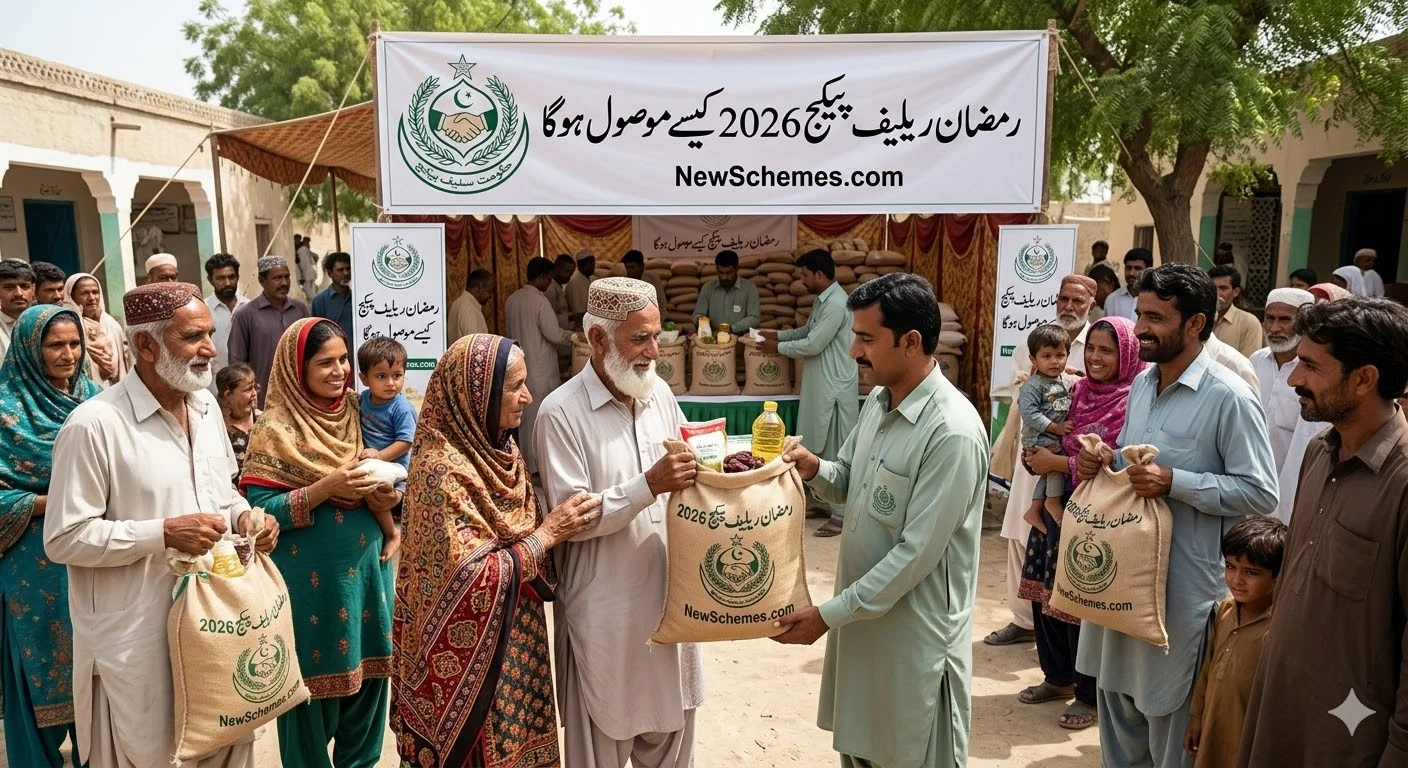
How the Ramzan Relief Package 2026 Will Be Received
The government has designed a multi-channel distribution system to ensure the Ramzan Relief Package 2026 reaches all eligible households, including urban, rural, and remote areas. There are three main methods: cash transfers, ration kits, and provincial or NGO-supported distributions.
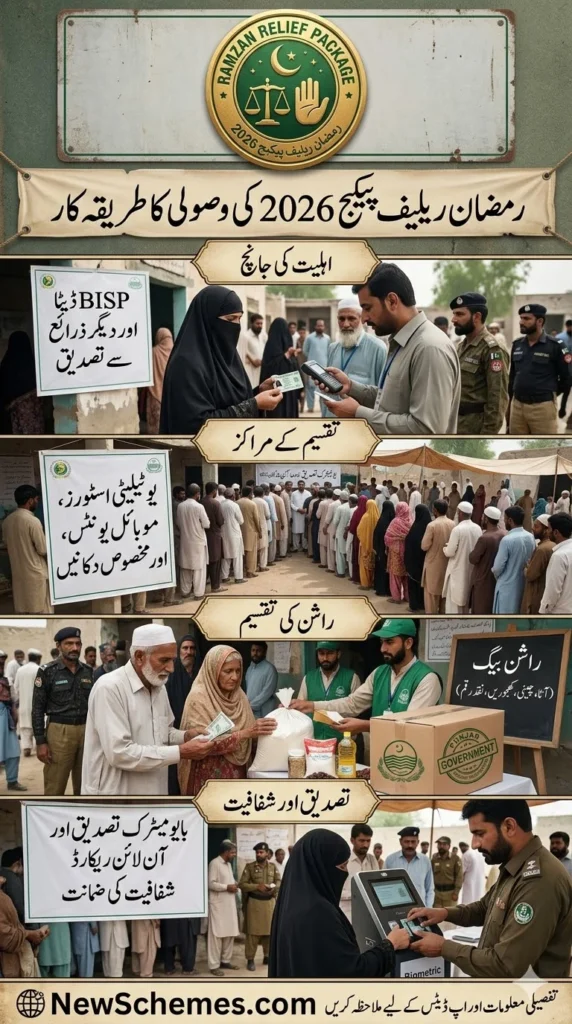
1. Cash Assistance
The cash component of the Ramzan Relief Package is distributed primarily through digital banking and mobile wallets, but also through banks and local offices for households without digital access.
Steps to receive cash assistance:
- Eligibility Verification:
- Citizens must check eligibility through the Ehsaas Program or BISP portals using their CNIC number.
- Priority is given to households already registered in these social welfare programs.
- Mode of Disbursement:
- Mobile Wallets: JazzCash, Easypaisa, and other mobile banking apps.
- Bank Transfers: Cash is directly transferred to bank accounts linked with CNIC.
- Local Centers: For households without mobile banking or bank access, funds are distributed at local government offices or community centers.
- Notification:
- Once verified, recipients receive an SMS or email confirmation detailing the disbursement method and date.
- Collection:
- Mobile wallet users can withdraw from authorized agents or ATMs.
- Bank account recipients receive funds directly in their account.
- Manual distribution points provide cash in hand after identity verification.
2. Ration Distribution
The ration kits are aimed at providing essential food items during Ramadan, especially for households in remote or underserved areas.
How rations are received:
- Provincial Coordination:
- Provincial governments manage distribution in urban and rural centers.
- NGOs like Edhi Foundation and Saylani Welfare International Trust assist in reaching remote locations.
- Ration Kit Contents:
- 10 kg flour
- 5 kg sugar
- 2 liters cooking oil
- 2 kg pulses/lentils
- 1 kg dates
- Distribution Method:
- Local centers: Citizens can collect kits from nearby schools, mosques, or community halls.
- Mobile vans: Special mobile ration vans are dispatched to rural areas for direct delivery.
- Verification:
- CNIC verification is required to ensure that kits reach eligible households only.
- Provincial staff and volunteers manage distribution efficiently.
3. Provincial and Special Initiatives
Some provinces have additional measures to ensure maximum reach:
- Punjab: Mobile ration vans deliver to remote villages; extra subsidies on wheat and sugar.
- Sindh: Urban daily wage workers receive cash grants along with ration support.
- Khyber Pakhtunkhwa: Medical camps and ration distributions run together for efficiency.
- Balochistan: Special outreach programs target tribal areas with transport support to help families collect aid.
Key Points to Ensure Smooth Receipt
- Verify CNIC registration early to avoid delays.
- Keep mobile numbers updated for SMS notifications.
- Check official government announcements for ration pickup schedules.
- Follow provincial helplines if there are issues with receiving aid.
- NGO partnerships often provide doorstep delivery for those unable to travel.
Conclusion
Receiving the Ramzan Relief Package 2026 is straightforward if you verify eligibility, select a disbursement method, and follow provincial distribution instructions. Whether it’s cash transfers through banks/mobile wallets or ration kits delivered locally, the government and partner NGOs have designed a system to ensure timely, transparent, and fair access to aid.