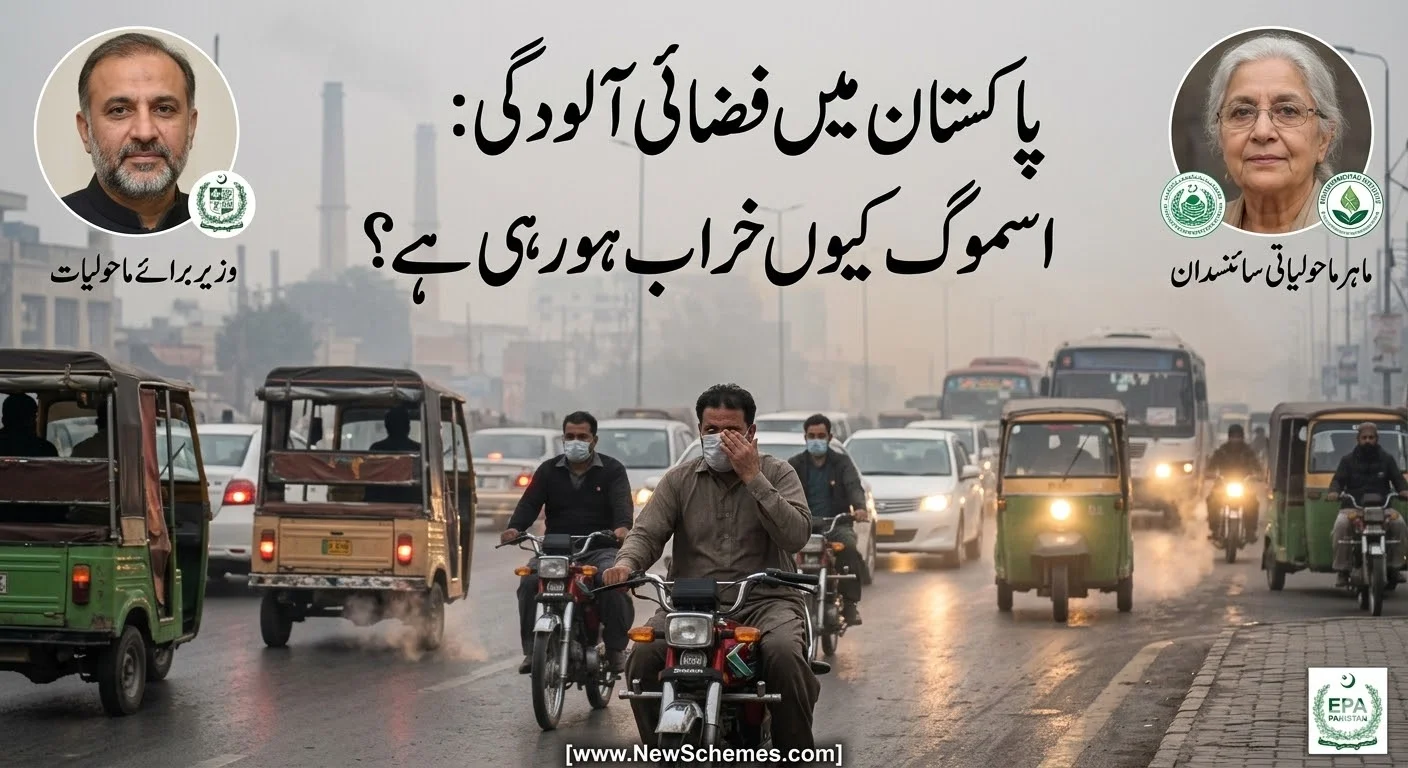
Air Pollution in Pakistan: Why Smog Is Getting Worse
Air pollution in Pakistan has become one of the most serious environmental and public health challenges in recent years. Major cities such as Lahore, Karachi, and Islamabad frequently experience dangerous levels of smog, especially during winter months. Thick grey haze covers the sky, reducing visibility and causing severe health problems for millions of people.
Experts warn that Pakistan’s worsening air quality is driven by rapid urbanization, industrial emissions, vehicle pollution, and climate conditions. Understanding the causes and effects of smog is crucial for finding long-term solutions.
What Is Smog?
Smog is a type of severe air pollution created when smoke, fog, and chemical pollutants mix in the atmosphere. It forms when harmful gases and fine particles become trapped in the air, particularly during cold weather when wind circulation is low.
The most dangerous particles in smog are PM2.5 and PM10, which are tiny enough to enter human lungs and even the bloodstream.
Major Causes of Air Pollution in Pakistan
1. Vehicle Emissions
One of the biggest contributors to air pollution in Pakistan is the rapidly increasing number of vehicles. Many cars, buses, and motorcycles run on low-quality fuel and lack proper emission control systems.
Cities like Lahore and Karachi experience heavy traffic congestion, which releases large amounts of carbon monoxide, nitrogen oxides, and other harmful gases.
2. Industrial Pollution
Factories and industrial plants release smoke, chemicals, and toxic gases into the air. Industrial zones around Faisalabad and Lahore are often blamed for worsening air quality.
Many industries still use outdated technologies that produce higher emissions.
3. Crop Burning
Every year farmers in parts of India and Pakistan burn crop residue after harvesting. This agricultural burning releases huge clouds of smoke that travel across borders and contribute heavily to smog.
During October and November, these fires significantly worsen smog levels in Lahore and surrounding areas.
4. Construction Dust
Rapid urban development has increased construction activities across major cities. Dust from construction sites and unpaved roads adds large amounts of particulate matter to the air.
Without proper dust control, these particles remain suspended in the atmosphere.
5. Weather and Climate Conditions
Weather patterns also play a role in trapping pollution. During winter, temperature inversion prevents polluted air from rising and dispersing.
This leads to thick layers of smog accumulating over cities.
Health Effects of Smog
Smog exposure can cause serious health problems, especially for children, the elderly, and people with respiratory diseases.
Common health effects include:
- Breathing difficulties
- Eye irritation
- Persistent coughing
- Asthma attacks
- Lung infections
- Heart problems
Long-term exposure to polluted air can even reduce life expectancy.
Economic and Environmental Impact
Air pollution does not only affect health—it also impacts the economy and environment.
Major consequences include:
- Reduced worker productivity
- Increased healthcare costs
- Damage to crops and vegetation
- Lower tourism due to poor visibility
- Climate change acceleration
These impacts make air pollution one of Pakistan’s most costly environmental issues.
Government Efforts to Control Smog
Authorities in Pakistan have introduced several measures to combat smog, including:
- Temporary closure of schools during high smog periods
- Bans on crop burning
- Restrictions on construction activities
- Promotion of public transportation
- Monitoring of air quality levels
However, experts believe stronger policies and stricter enforcement are still needed.
Solutions to Reduce Air Pollution
Solving the air pollution crisis requires combined efforts from governments, industries, and citizens.
Key solutions include:
1. Promote Clean Energy
Switching to renewable energy sources such as solar and wind power can significantly reduce emissions.
2. Improve Public Transport
Developing efficient public transport systems can reduce the number of private vehicles on the road.
3. Enforce Industrial Regulations
Factories must adopt modern pollution-control technologies and follow strict environmental regulations.
4. Plant More Trees
Urban forestry programs can help absorb pollutants and improve air quality.
5. Public Awareness
Educating citizens about environmental protection and sustainable practices is essential for long-term change.
The Future of Air Quality in Pakistan
If strong environmental policies are implemented and public awareness increases, Pakistan can gradually improve its air quality. Sustainable urban planning, clean technology, and regional cooperation will play key roles in reducing smog.
Without immediate action, however, air pollution will continue to threaten public health and economic growth.
Frequently Asked Questions (FAQs)
Why is smog worse in Pakistan during winter?
Smog worsens in winter due to temperature inversion, which traps pollutants close to the ground.
Which city in Pakistan is most affected by smog?
Cities like Lahore frequently record the highest pollution levels.
How does smog affect human health?
Smog can cause respiratory diseases, heart problems, eye irritation, and long-term lung damage.
Can air pollution in Pakistan be reduced?
Yes. Through stricter environmental policies, cleaner energy, improved transportation, and public awareness.