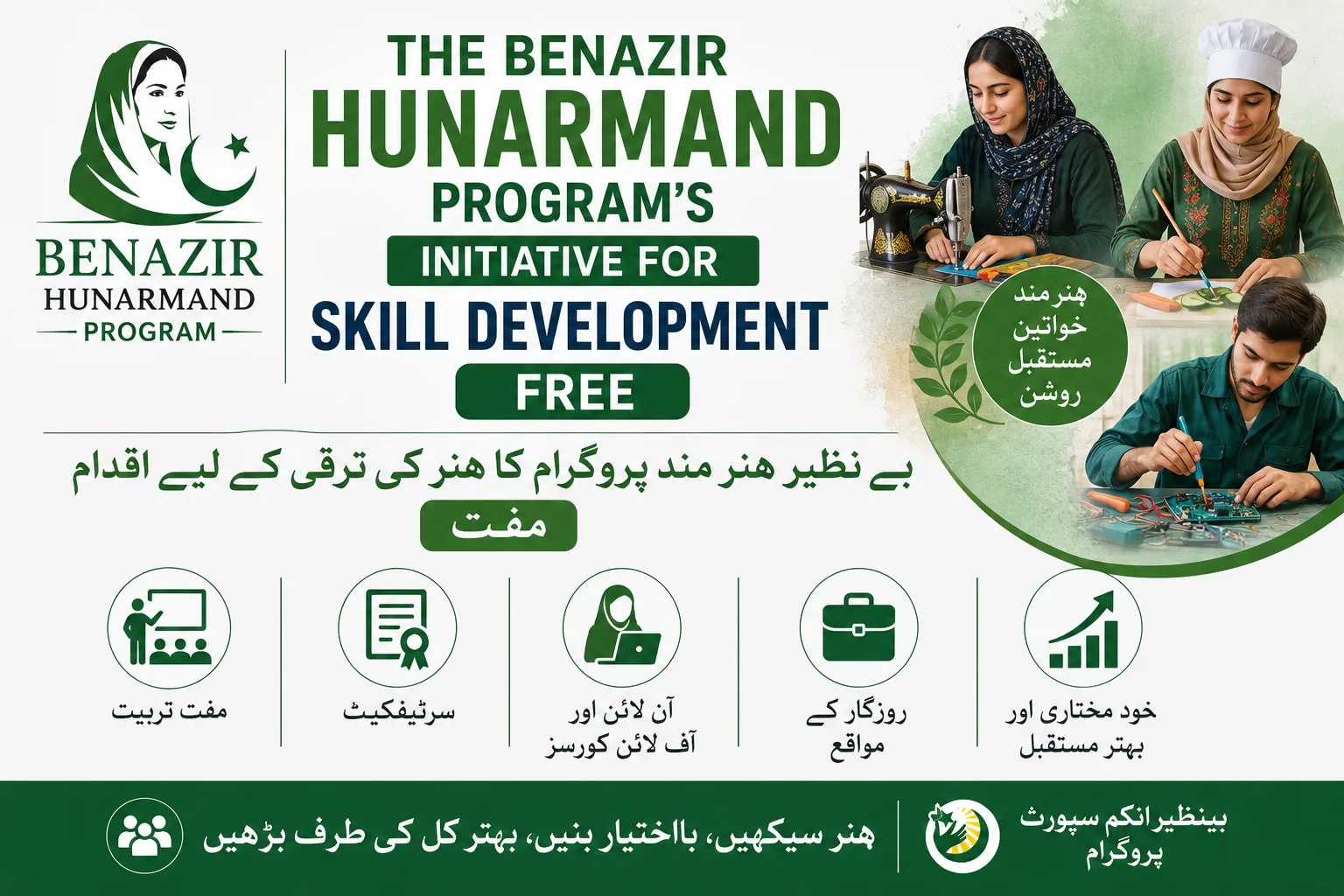
Empowering Futures: The Benazir Hunarmand Program’s Initiative for Skill Development
The Benazir Hunarmand Program, an integral extension of the Benazir Income Support Programme (BISP), represents a significant initiative by the Government of Pakistan aimed at uplifting the livelihoods of its most vulnerable citizens. This ambitious program focuses on providing free technical and vocational training to BISP beneficiaries and their family members, equipping them with market-relevant skills to secure employment and foster economic self-sufficiency. By aligning training with current industrial needs and international standards, the Benazir Hunarmand Program seeks to bridge the gap between unemployment and skilled labor.
Click here to Online Apply
Understanding Benazir Income Support Programme (BISP)
Established in 2008, the Benazir Income Support Programme (BISP) is Pakistan’s premier social safety net, designed to provide financial assistance to eligible families living below the poverty line. BISP aims to reduce poverty and promote human capital development through various interventions, including unconditional cash transfers. The introduction of the Benazir Hunarmand Program marks a strategic shift towards enhancing human capital further, moving beneficiaries from mere subsistence towards sustainable income generation.
Vision and Objectives of the Benazir Hunarmand Program
The core vision of the Benazir Hunarmand Program is to empower beneficiaries with market-relevant skills that meet both local industrial requirements and global standards. This initiative targets the improvement of livelihoods by enhancing employability, thereby breaking cycles of poverty. Through comprehensive technical and vocational training, the program aims to foster a skilled workforce capable of contributing to Pakistan’s economic growth. Participants emerge not only with valuable knowledge but also with renewed confidence.
Key Training Sectors for Industrial Needs
To ensure the relevance and efficacy of the training, the Benazir Hunarmand Program offers courses in diverse sectors identified as having high demand and growth potential. These fields are carefully selected to match current industrial needs, reflecting both local market requirements and international best practices. The goal is to maximize the chances of trainees securing meaningful employment upon completion.
Specific sectors where training is being offered include:
- Hotel Management: Catering to the expanding hospitality industry.
- Computer Operating & IT Skills: Essential for the modern digital economy.
- Healthcare: Addressing the constant demand for skilled medical support staff.
- Home Services: Covering a range of domestic professional skills.
- Construction: Supporting infrastructure development projects nationwide.
- Other Technical and Vocational Fields: Adapting to new emerging industries.
Benefits for Benazir Hunarmand Program Participants
Participation in the Benazir Hunarmand Program comes with several tangible benefits designed to encourage enrollment and support trainees throughout their learning journey. These incentives ensure that financial constraints do not deter deserving individuals from acquiring valuable skills. Beneficiaries can expect comprehensive support that makes their training period productive and rewarding.
The benefits include:
- Monthly Stipend: To cover daily expenses during the training period.
- Bonus/Incentives: Recognizing dedication and successful completion.
- Training Certificate: A formal recognition of acquired skills, enhancing employability.
- Employment Opportunities: Direct linkages or facilitation in securing jobs post-training.
The duration of these training programs typically ranges from 3 to 6 months, providing intensive skill development within a focused timeframe. For more details on new schemes and eligibility, often information can be found on NewSchemes.com.
Eligibility and Application for the Benazir Hunarmand Program
A fundamental aspect of the Benazir Hunarmand Program is its targeted approach to uplift specific segments of society. Eligibility is strictly limited to current BISP beneficiaries and their immediate family members. This ensures that the program directly reaches those who are already recognized as requiring socio-economic upliftment.
Click here to Online Apply
Prospective candidates are encouraged to apply online to streamline the process. The digital platform at https://hunarmand.bisp.gov.pk/ provides all necessary information and allows eligible individuals to submit their applications efficiently. This user-friendly approach aims to make the program accessible to a wider audience, facilitating enrollment in the Benazir Hunarmand Program.
The Philosophy Behind the Benazir Hunarmand Program
The essence of the Benazir Hunarmand Program echoes the profound words of Benazir Bhutto herself: “Skill is your greatest asset.” This philosophy underpins the entire initiative, recognizing that while financial aid provides immediate relief, sustainable empowerment comes from acquiring valuable skills that lead to long-term economic independence. The program is a testament to the belief that investing in human capital is the most effective pathway out of poverty.
Transforming Livelihoods through the Benazir Hunarmand Program
By focusing on free technical and vocational training, the Benazir Hunarmand Program stands as a beacon of hope for thousands of Pakistani families. It offers a tangible pathway to employment, enabling individuals to not only support themselves but also contribute positively to their communities and the national economy. This strategic investment in skill development is crucial for building a more resilient and prosperous Pakistan.
Frequently Asked Questions (FAQs) about the Benazir Hunarmand Program
1. What is the Benazir Hunarmand Program?
The Benazir Hunarmand Program is a skill development initiative by the Government of Pakistan, extended through BISP, offering free technical and vocational training to BISP beneficiaries and their families to enhance their employability.
2. Who is eligible to apply for the Benazir Hunarmand Program?
Only registered beneficiaries of the Benazir Income Support Programme (BISP) and their immediate family members are eligible to enroll in the Benazir Hunarmand Program.
3. What types of training are offered under this program?
Training is offered in various high-demand sectors such as Hotel Management, Computer Operating & IT Skills, Healthcare, Home Services, Construction, and other technical and vocational fields, all aligned with industrial needs and international standards.
4. What benefits do participants receive during the training?
Participants receive a monthly stipend, bonuses/incentives, a recognized training certificate upon completion, and assistance in securing employment opportunities.
5. How long is the duration of the training programs?
The vocational and technical training courses typically range from 3 to 6 months in duration.
6. How can one apply for the Benazir Hunarmand Program?
Eligible individuals can apply online by visiting the official program portal at https://hunarmand.bisp.gov.pk/.
7. What is the main objective or vision of the Benazir Hunarmand Program?
The program’s vision is to equip beneficiaries with market-relevant skills that meet industrial requirements and international standards, helping them secure employment and significantly improve their livelihoods.
Conclusion
The Benazir Hunarmand Program represents a forward-thinking approach to poverty alleviation, shifting focus from merely providing financial aid to fostering self-sufficiency through skill development. By offering free, market-relevant technical and vocational training, coupled with stipends and employment support, the program directly addresses unemployment and economic vulnerability among BISP beneficiaries. This initiative holds the promise of transforming countless lives, equipping individuals with the “greatest asset” – skill – and thereby contributing to a more skilled workforce and a stronger national economy. Its success will significantly impact Pakistan’s journey towards sustainable development and improved living standards for its most disadvantaged populations.